

If you’ve ever wanted to try your hand at making Guyanese oil roti (also known as paratha roti), this is your sign to start small. This small batch approach makes it easy to practice, build confidence, and enjoy fresh roti without the stress of making a big batch. Whether it’s your first time or your fiftieth, sometimes cooking less is exactly what you need.
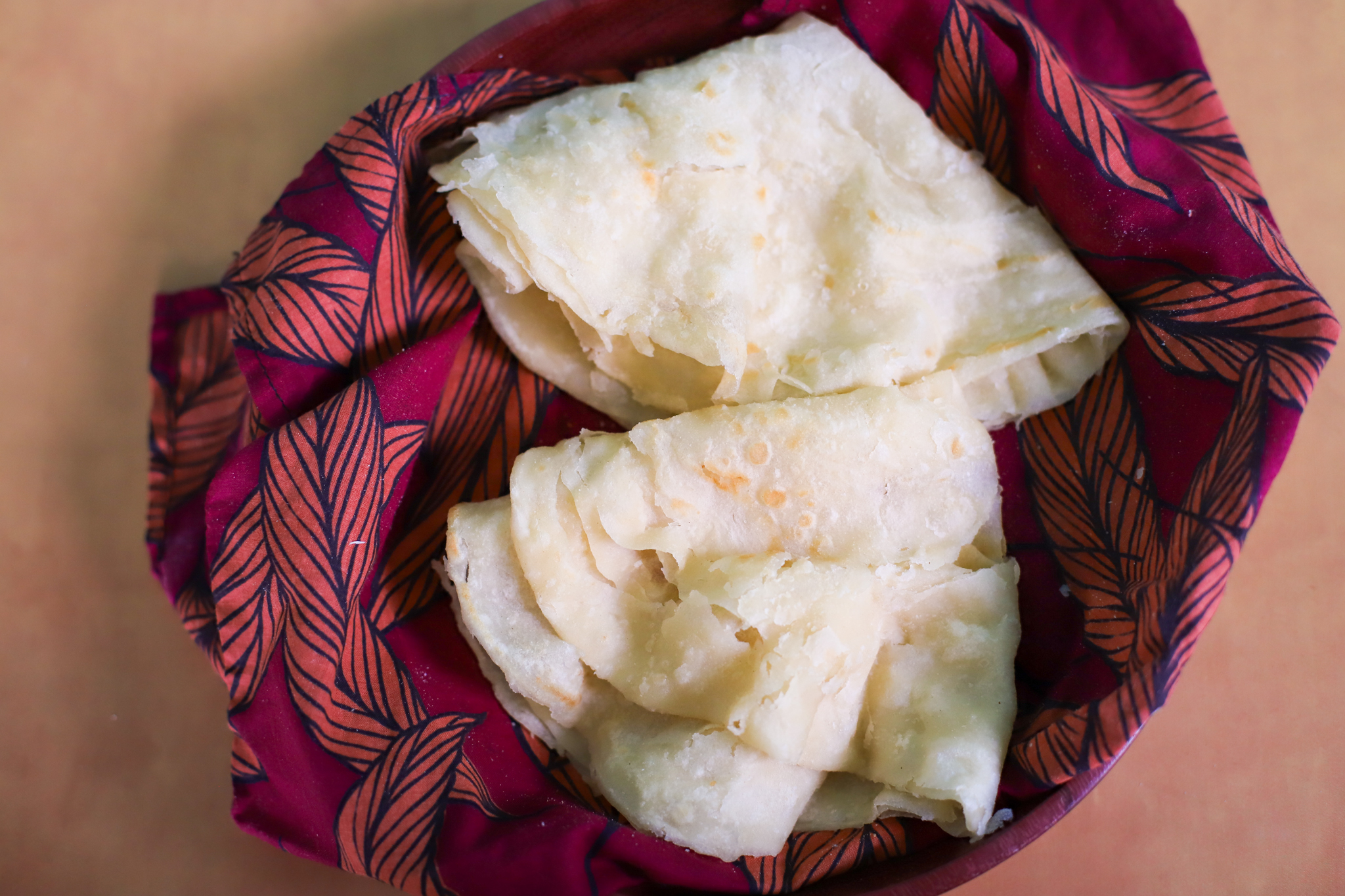
Guyanese oil roti is a soft, flaky flatbread made by layering dough with oil or fat, then cooking it on a tawah (or skillet) until lightly golden. This style of roti was brought to Guyana by Indian indentured laborers who came from various regions of India. It’s perfect for scooping up curries or enjoying just as is.
In my home, everyone seems to want something different for dinner sometimes, so I had to figure out how to make just two rotis for the nights when one of my sons wanted roti and the other didn’t. I figured I couldn’t be the only one with this dilemma and that’s how the small batch series was born.
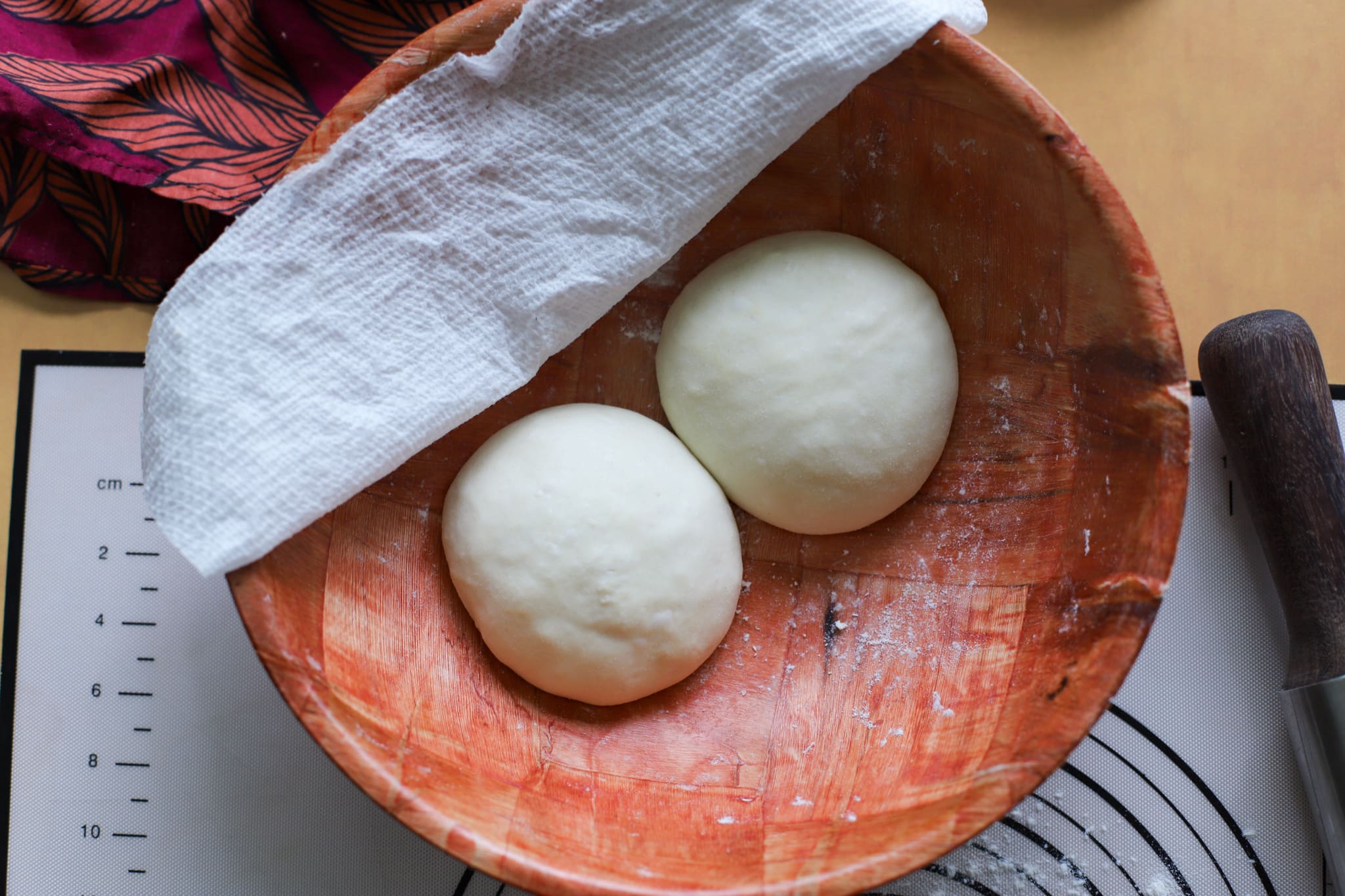
This recipe makes exactly two rotis. If that is just a little too small, you can easily double this recipe for four rotis. And a rule of thumb I like to follow when estimating how many rotis to make is ½ cup of flour per roti.
Small Batch Guyanese Oil/Paratha Roti
Learn how to make a small batch of soft, flaky Guyanese oil roti (paratha) with this easy recipe that makes just 2—perfect for reducing waste and trying something new.
Ingredients
- 1 cup all-purpose flour
- ¼ teaspoon baking powder
- ¼ teaspoon unsalted butter (optional)
- ½ cup very warm water
- 4 teaspoons neutral oil such as vegetable oil, safflower, grapeseed, or canola
- 1 teaspoon softened unsalted butter (mix with the 4 teaspoons of oil)
- ¼ cup flour for dusting
Instructions
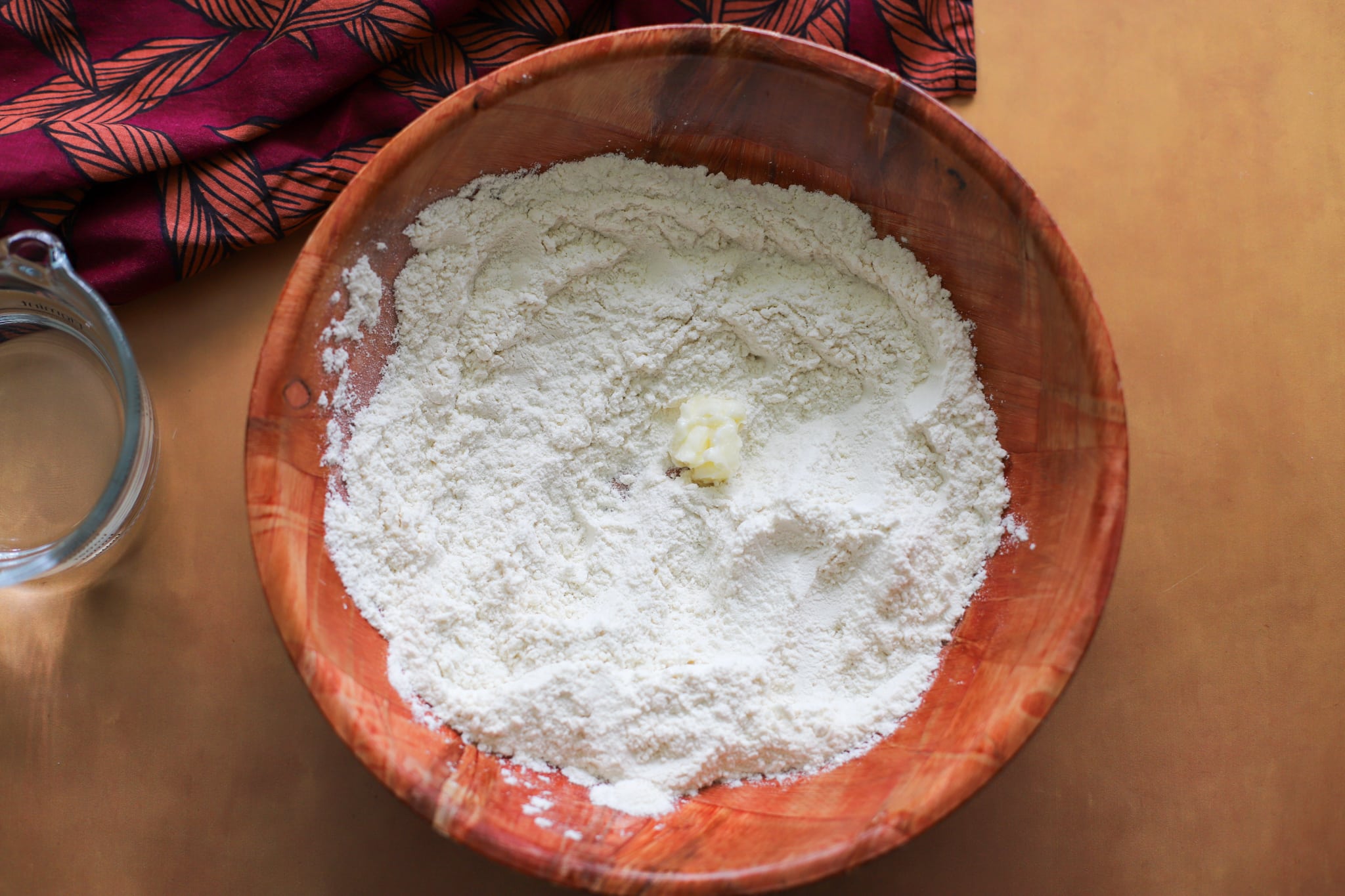
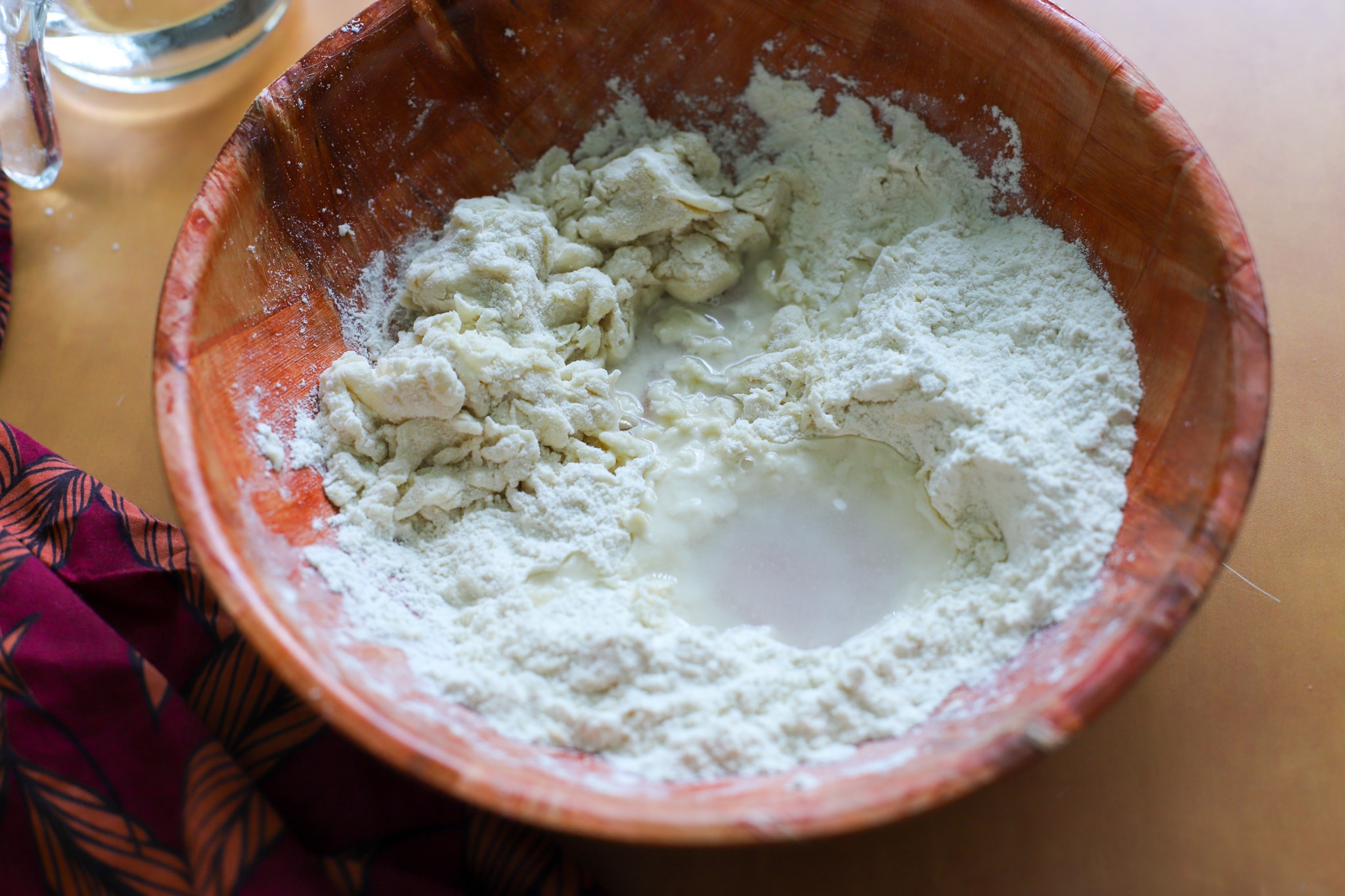
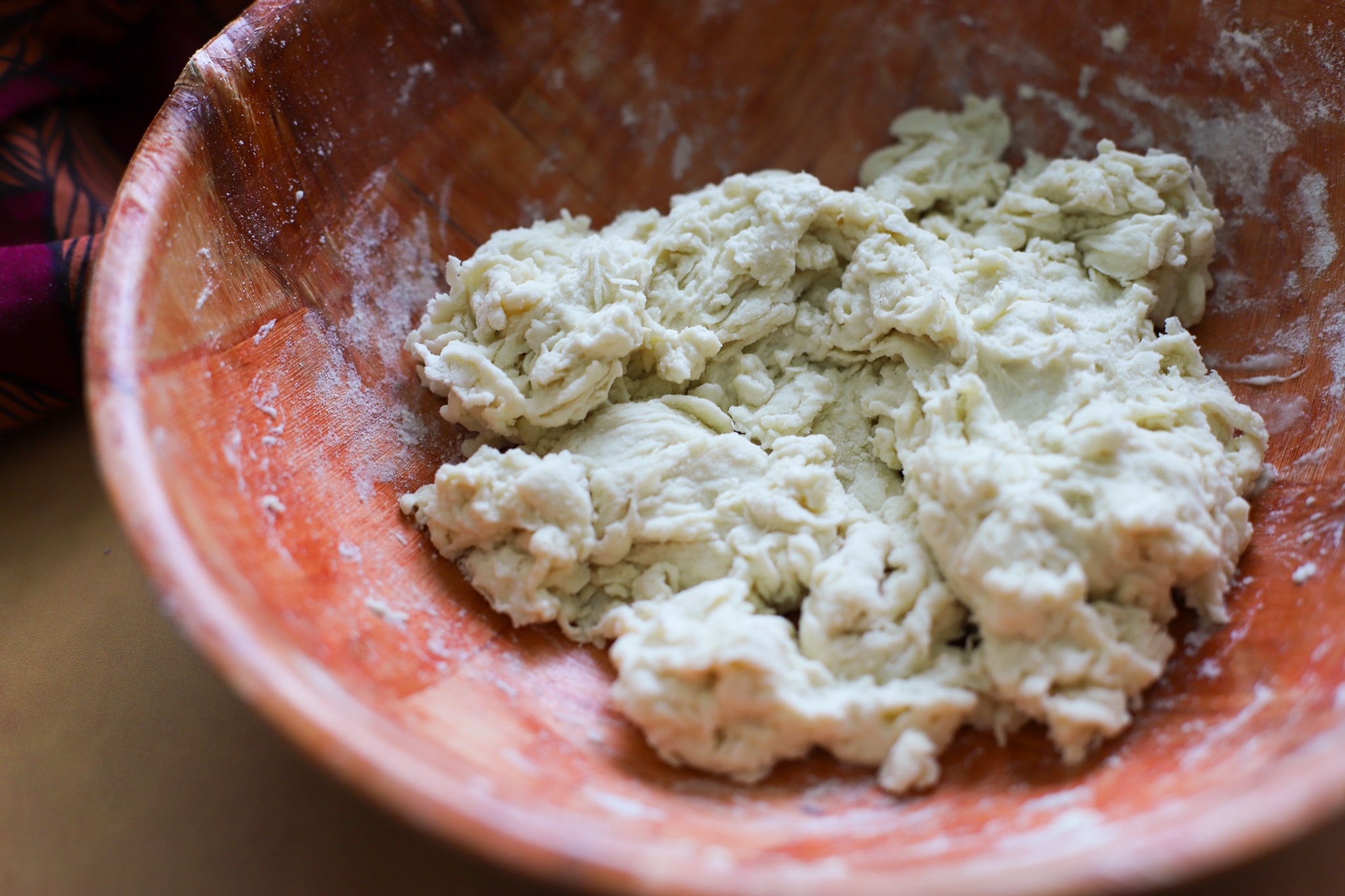
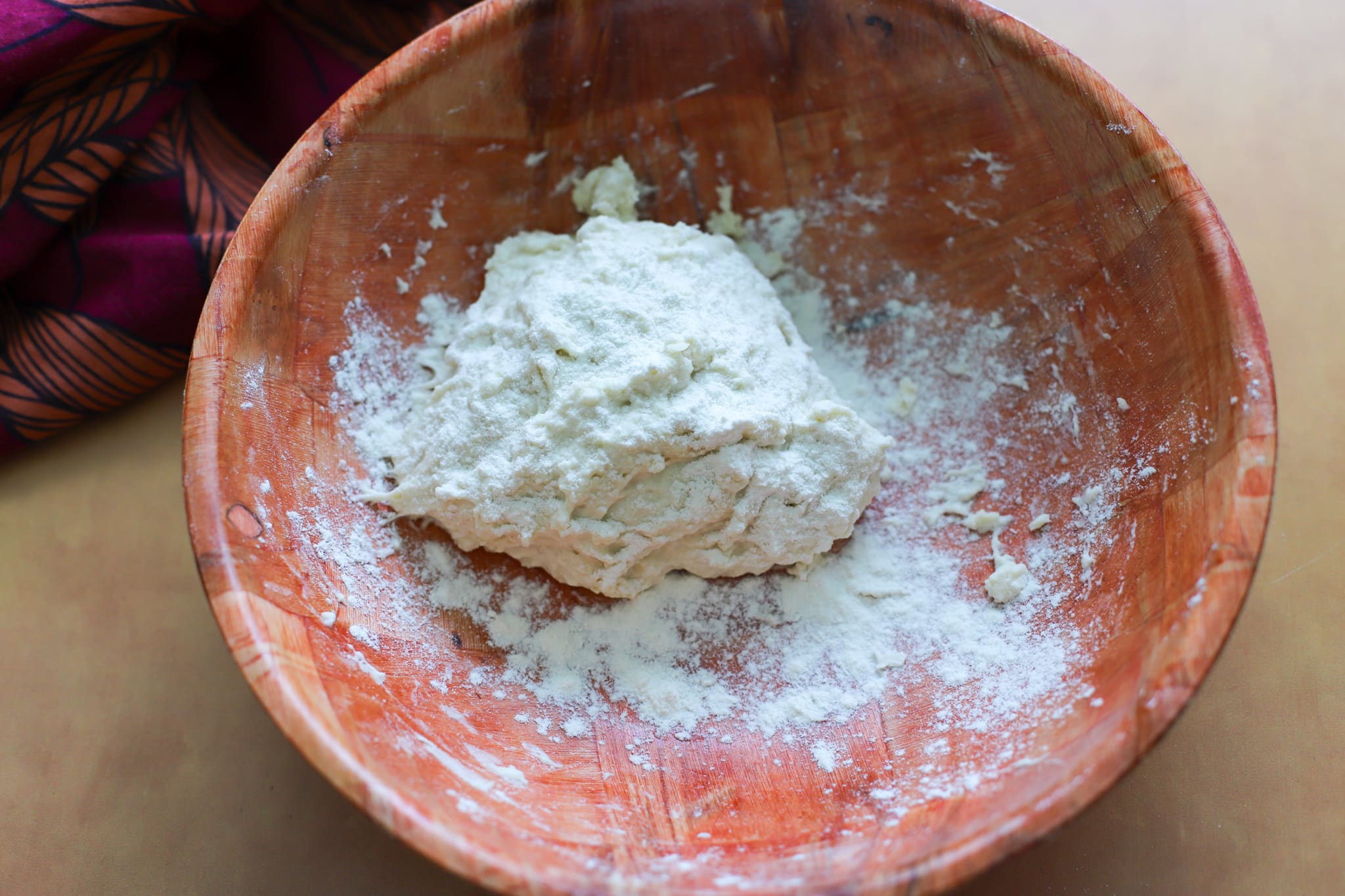
- Make the dough - In a bowl, combine the flour and baking powder. If using butter, rub it into the flour until it’s evenly distributed. Gradually add the warm water and mix in parts until large pieces of dough form.
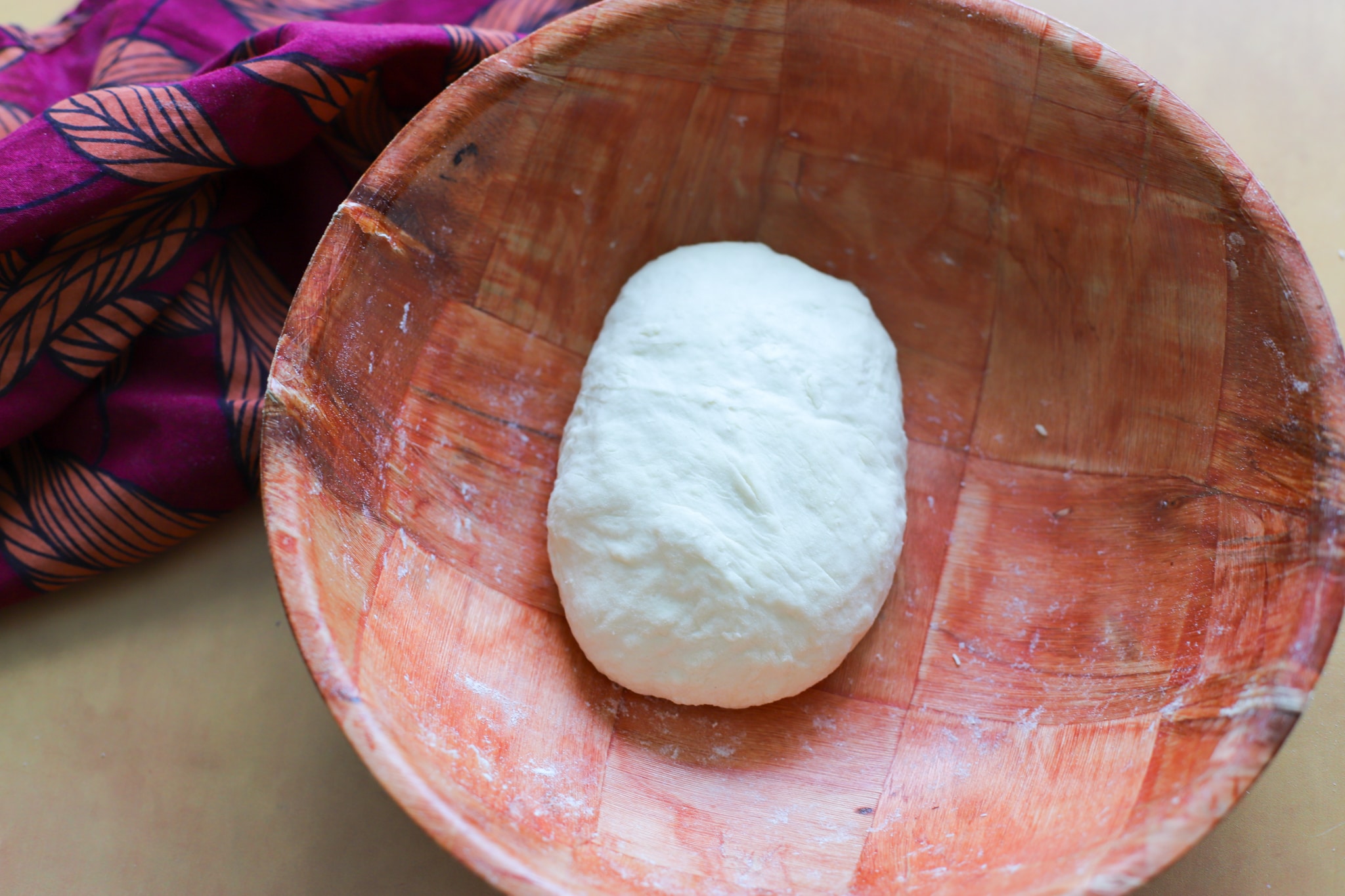
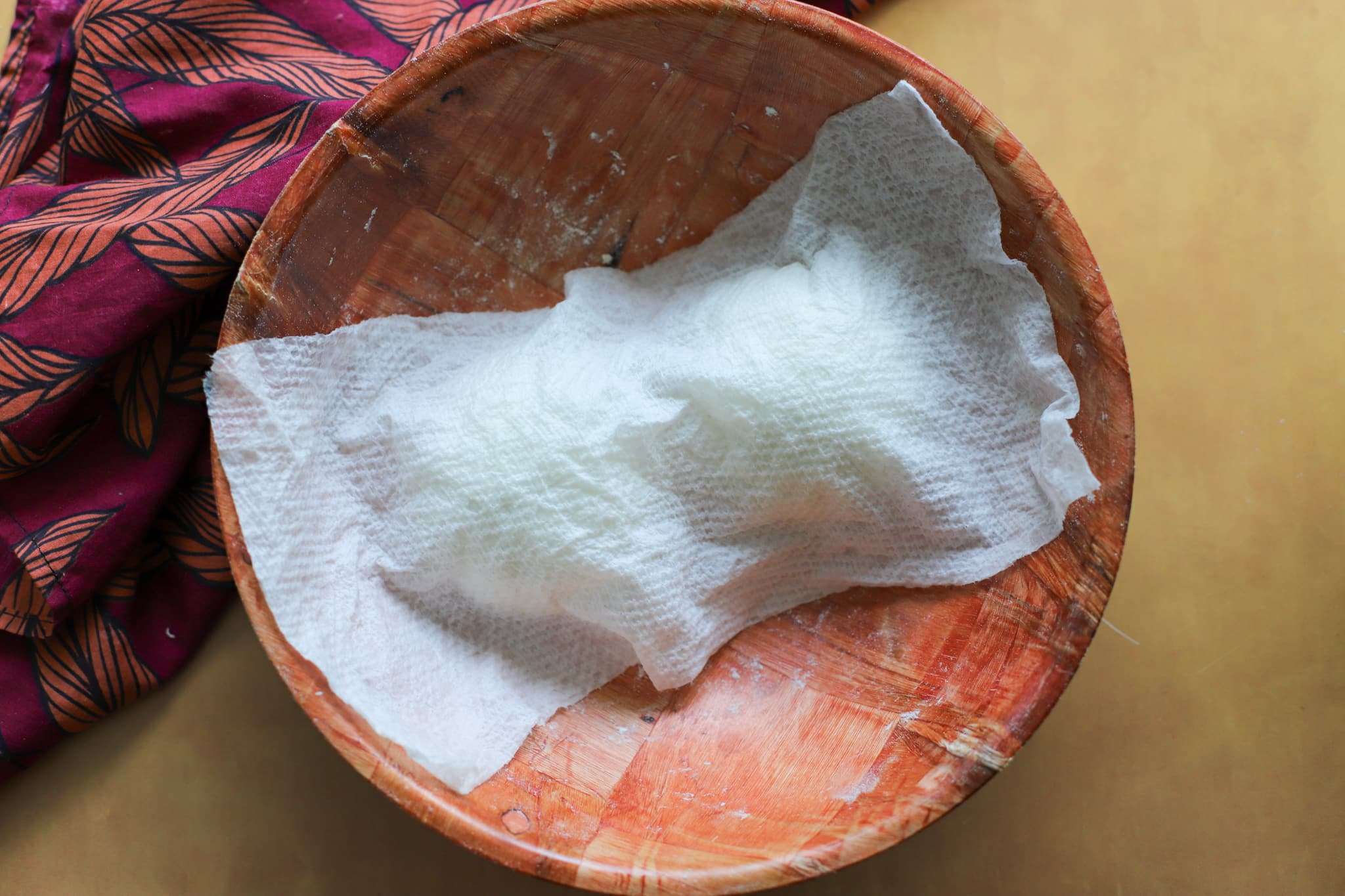
- Knead and rest - Squeeze the dough together into a ball then knead the dough for about 3–4 minutes until slightly smooth. Cover with a damp paper towel and let it rest for at least 25 minutes. This helps relax the dough and makes rolling easier.
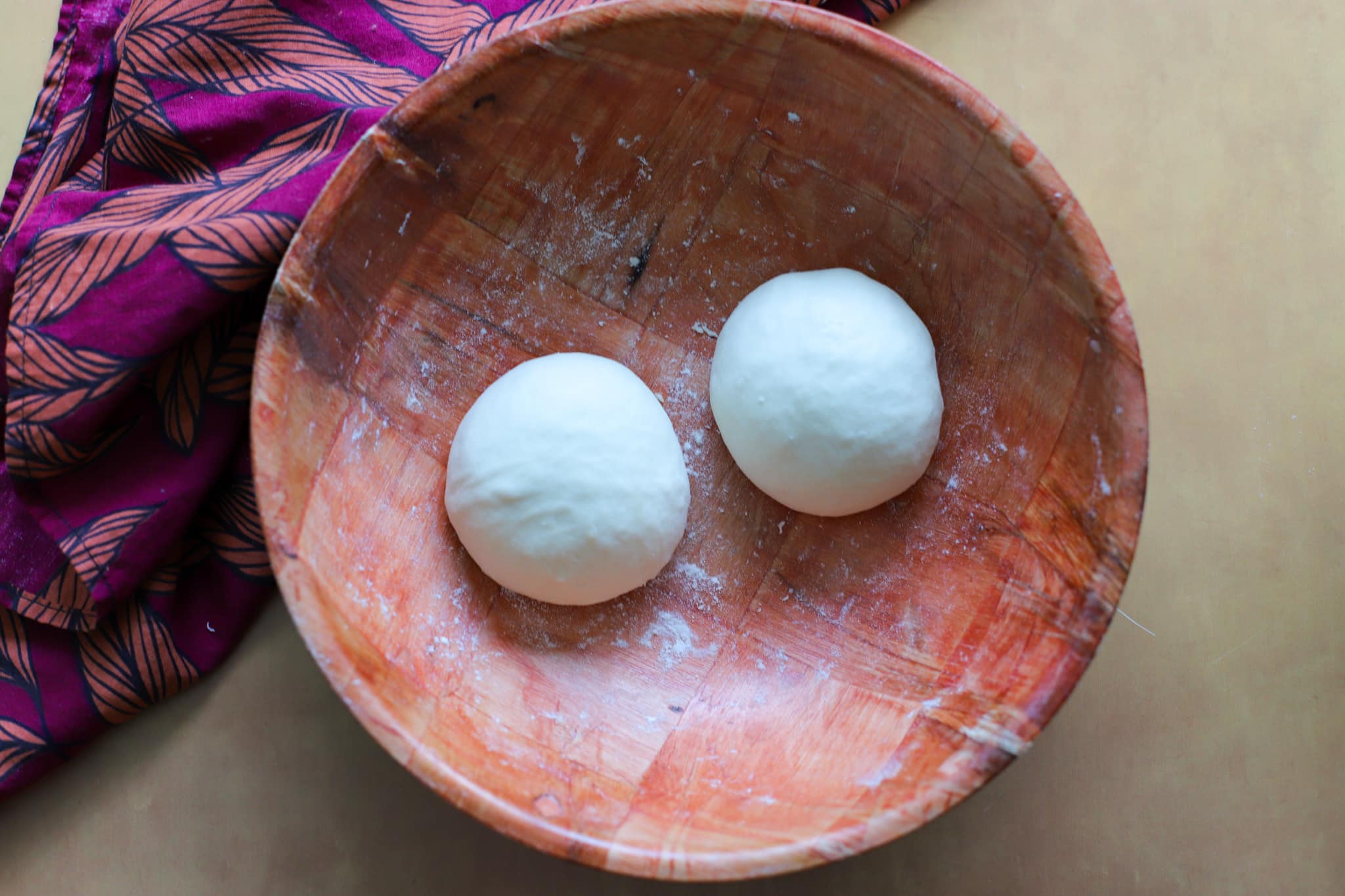
- Divide the dough - Cut the dough into 2 equal pieces.
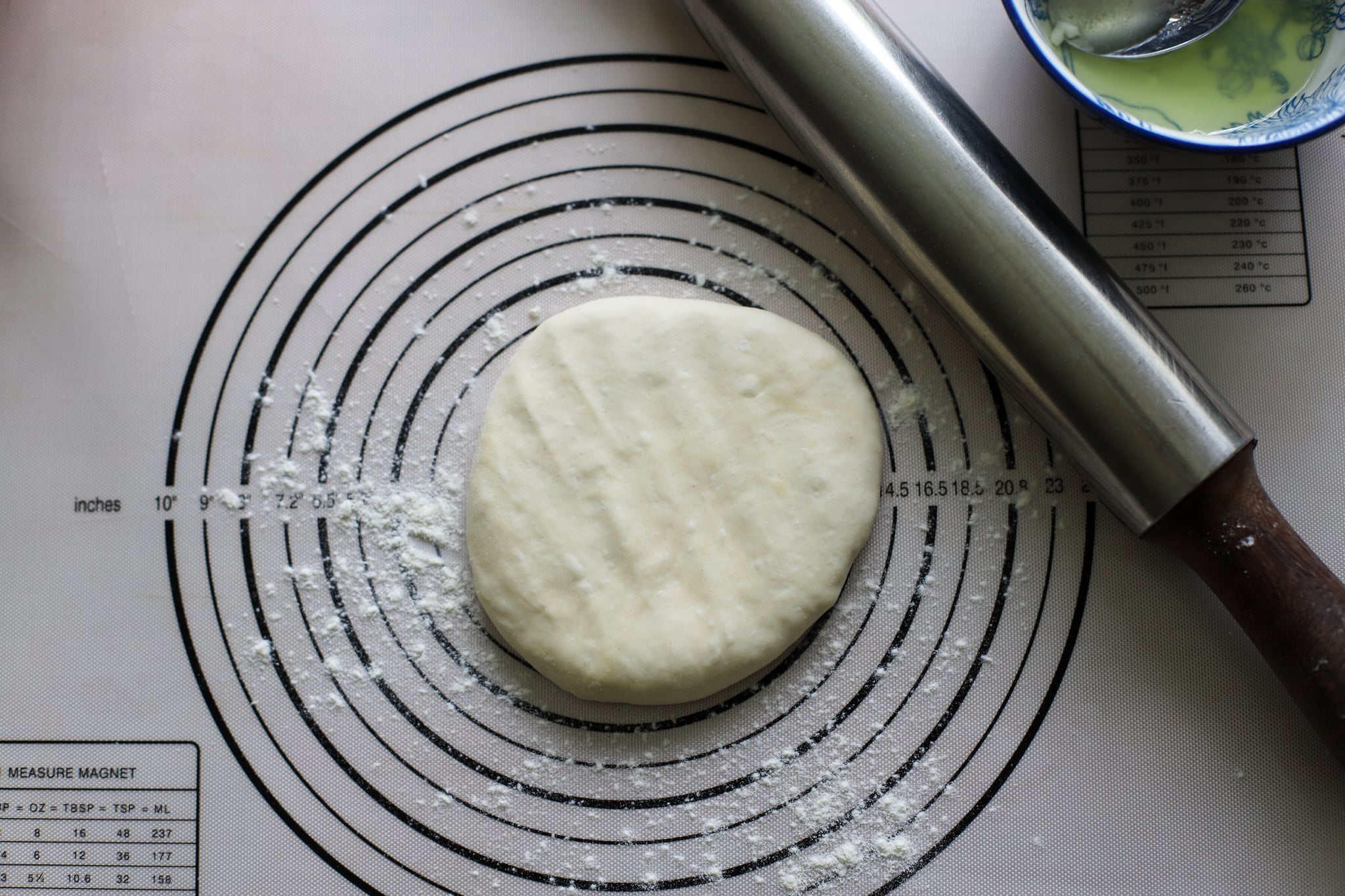
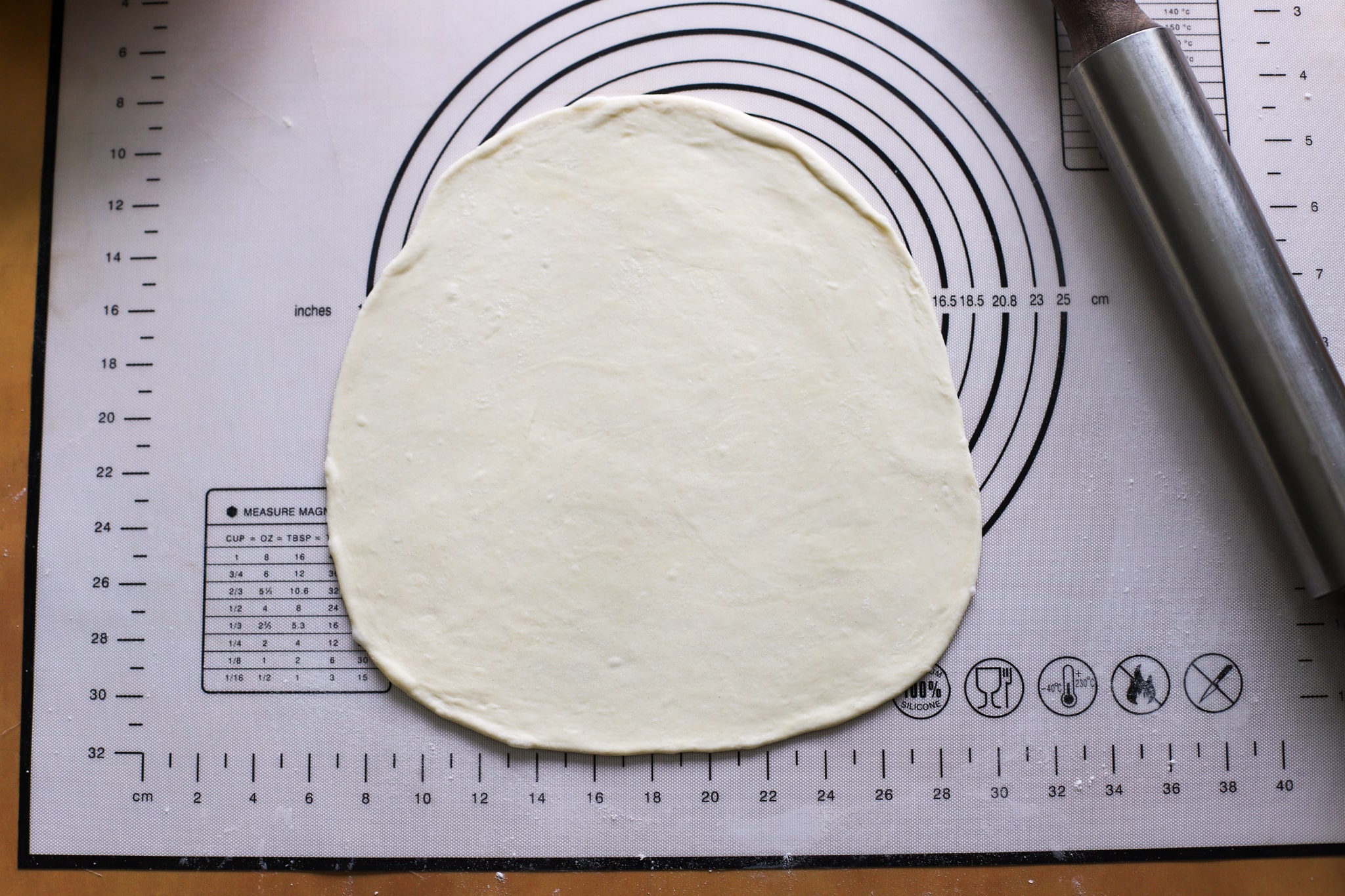
- Shape the roti- Roll one dough ball into a thin circle about ¼ inch thickness.
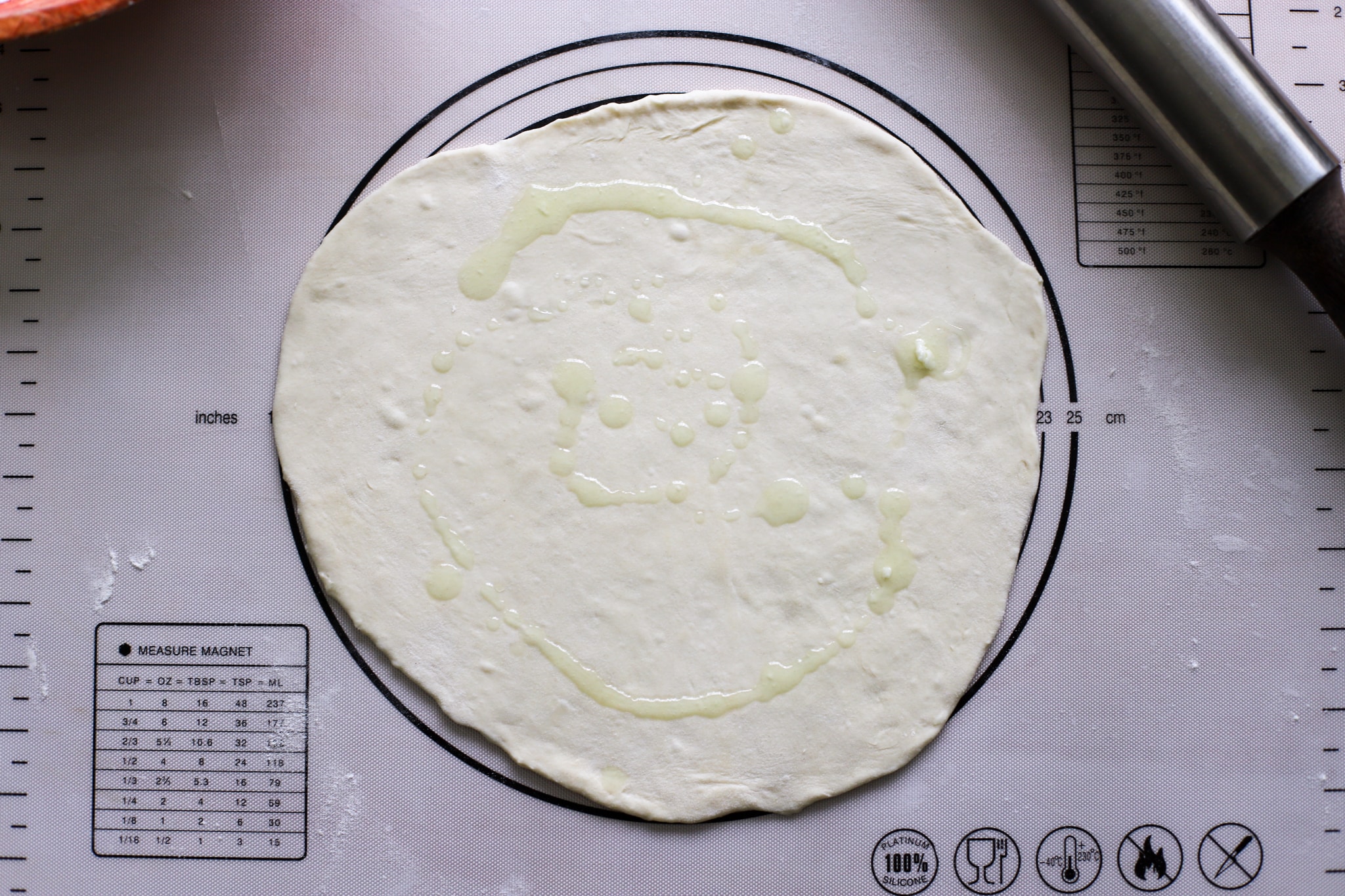
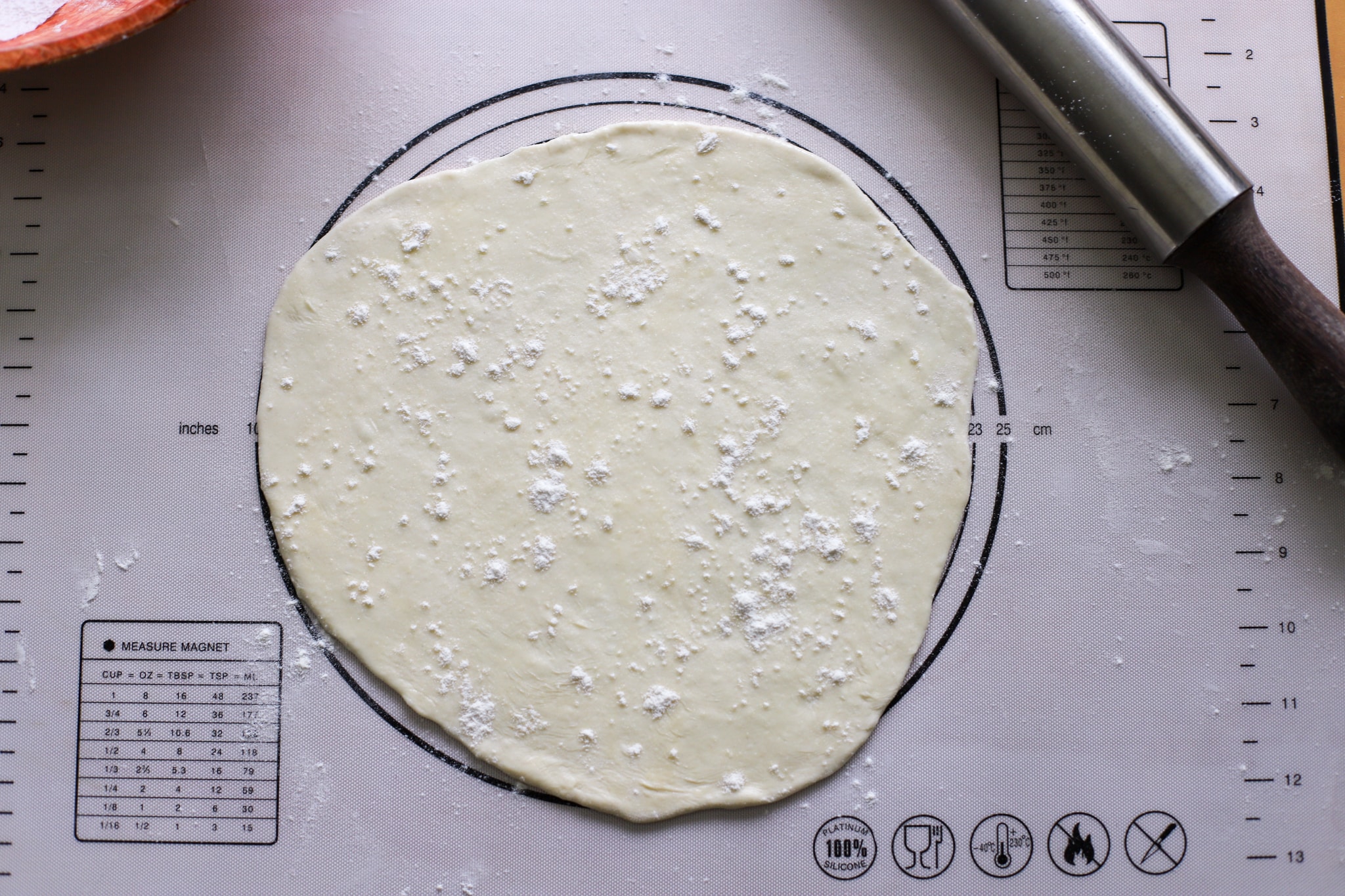
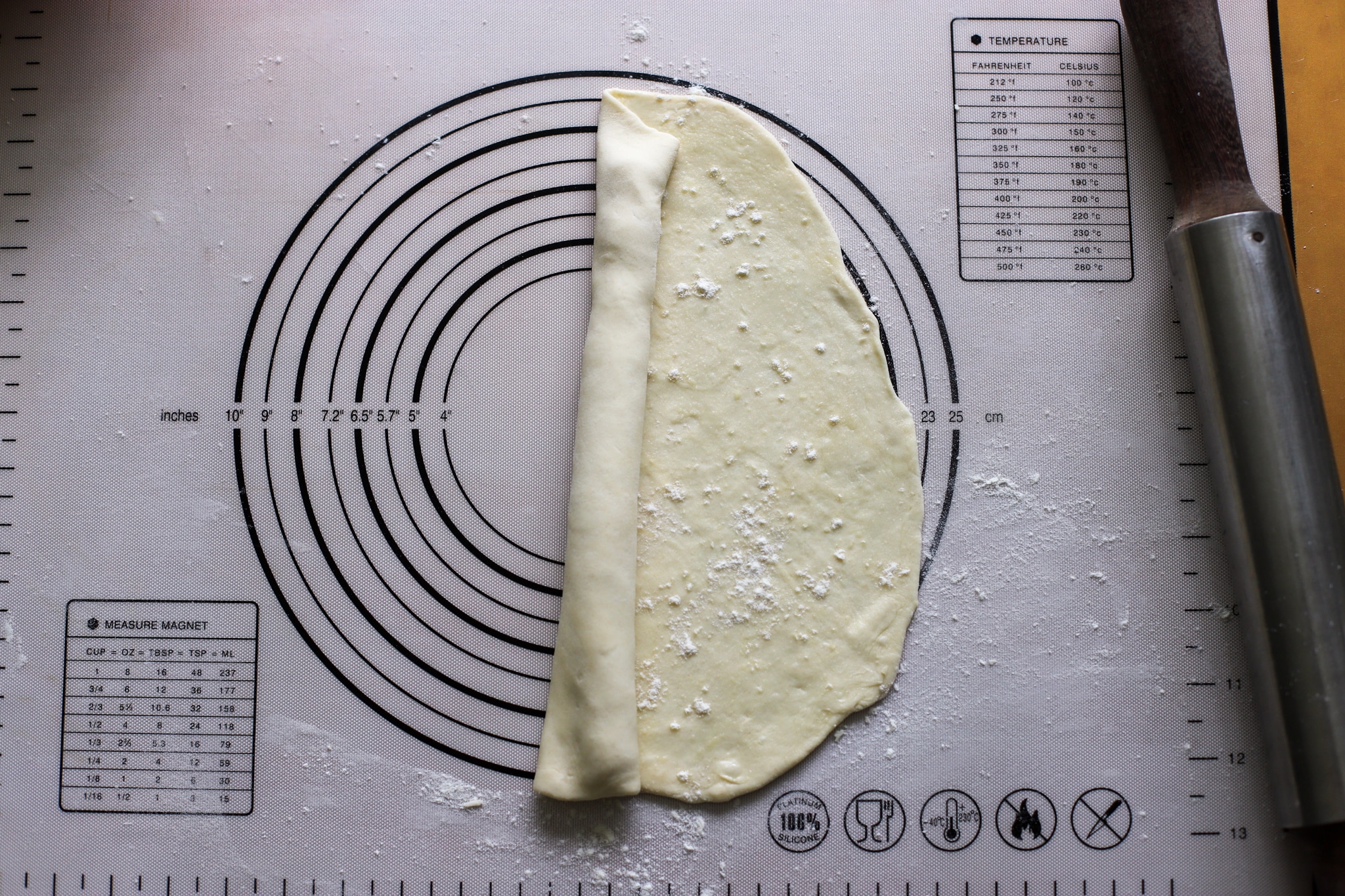
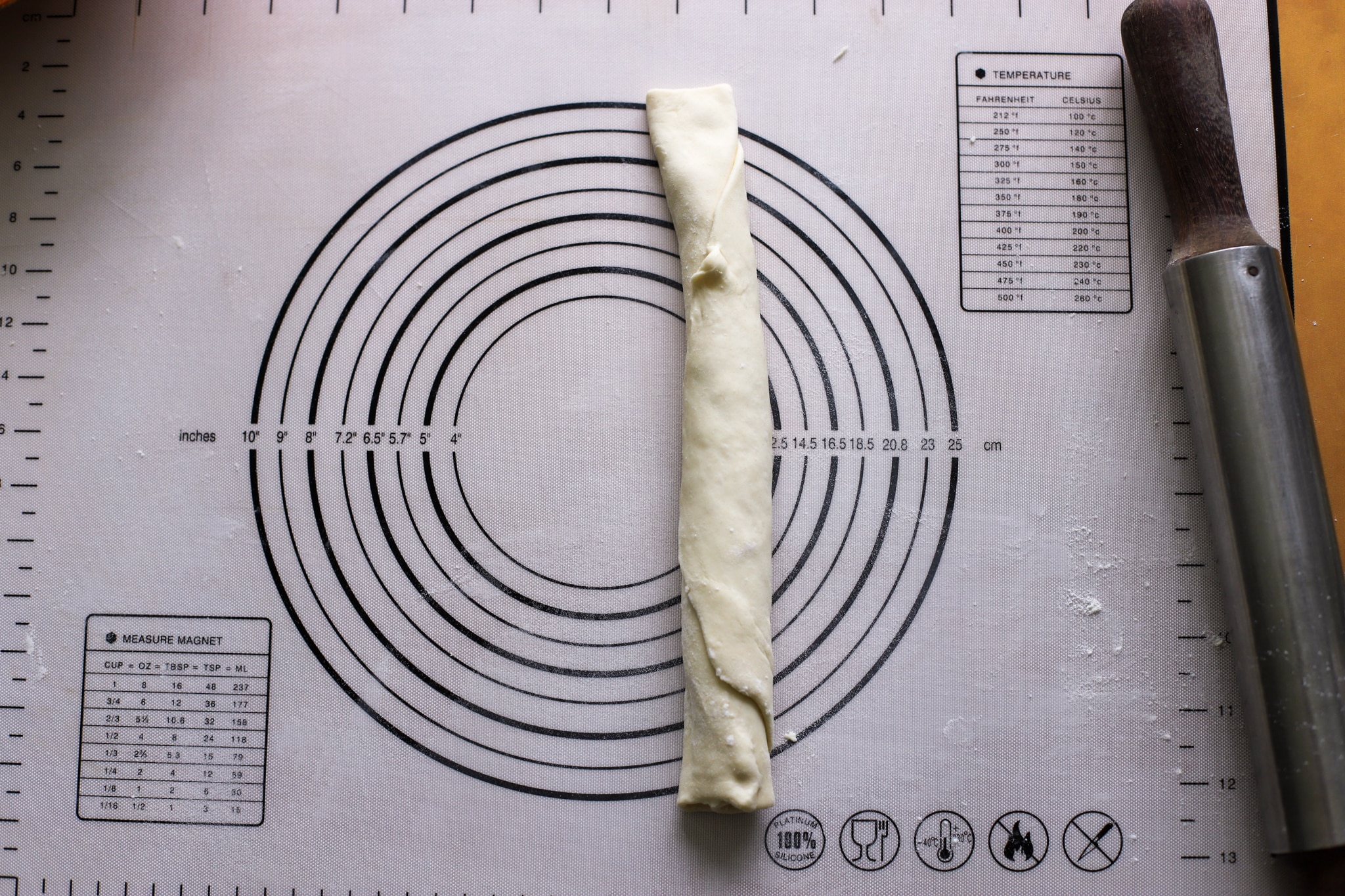
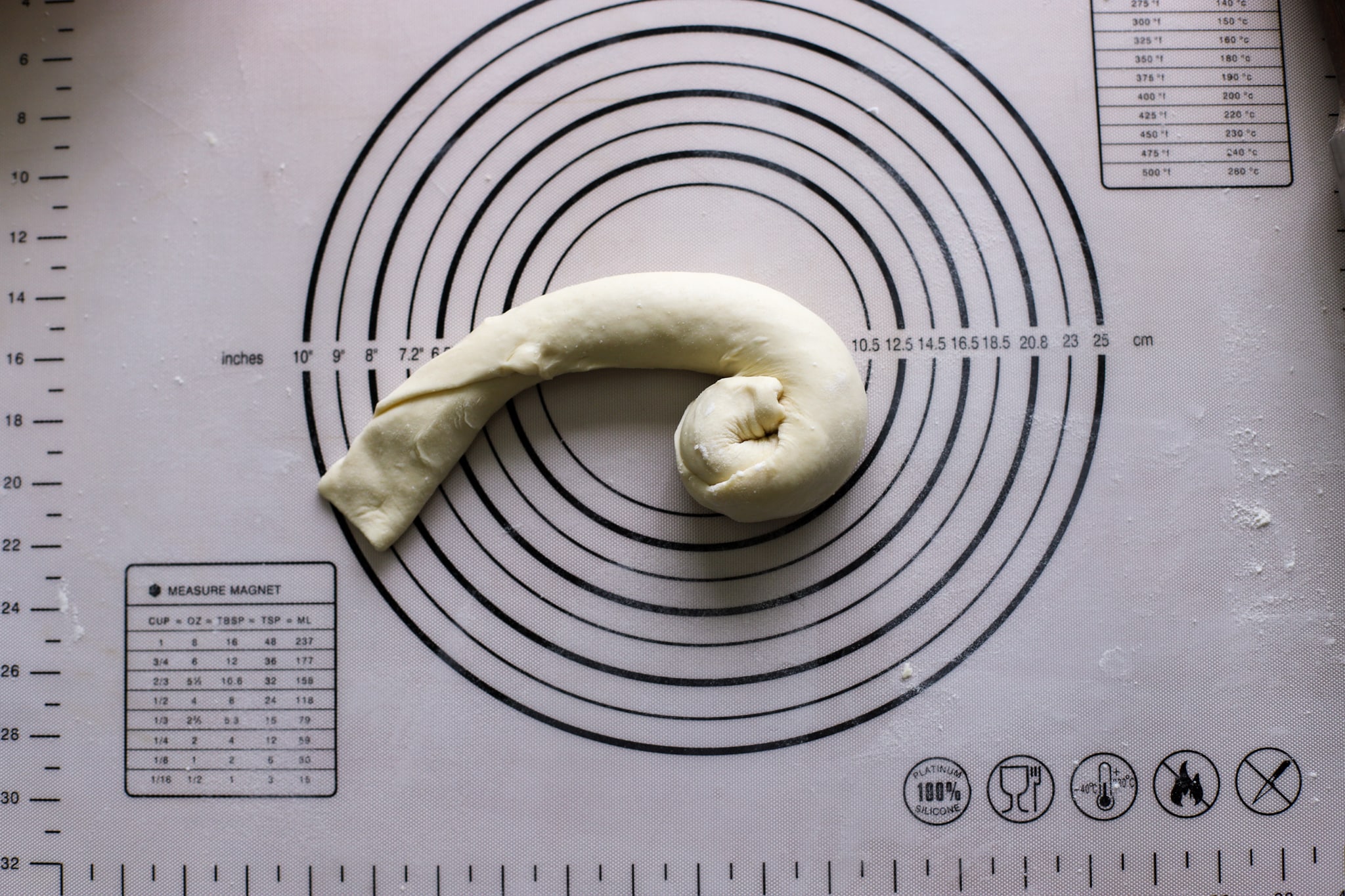
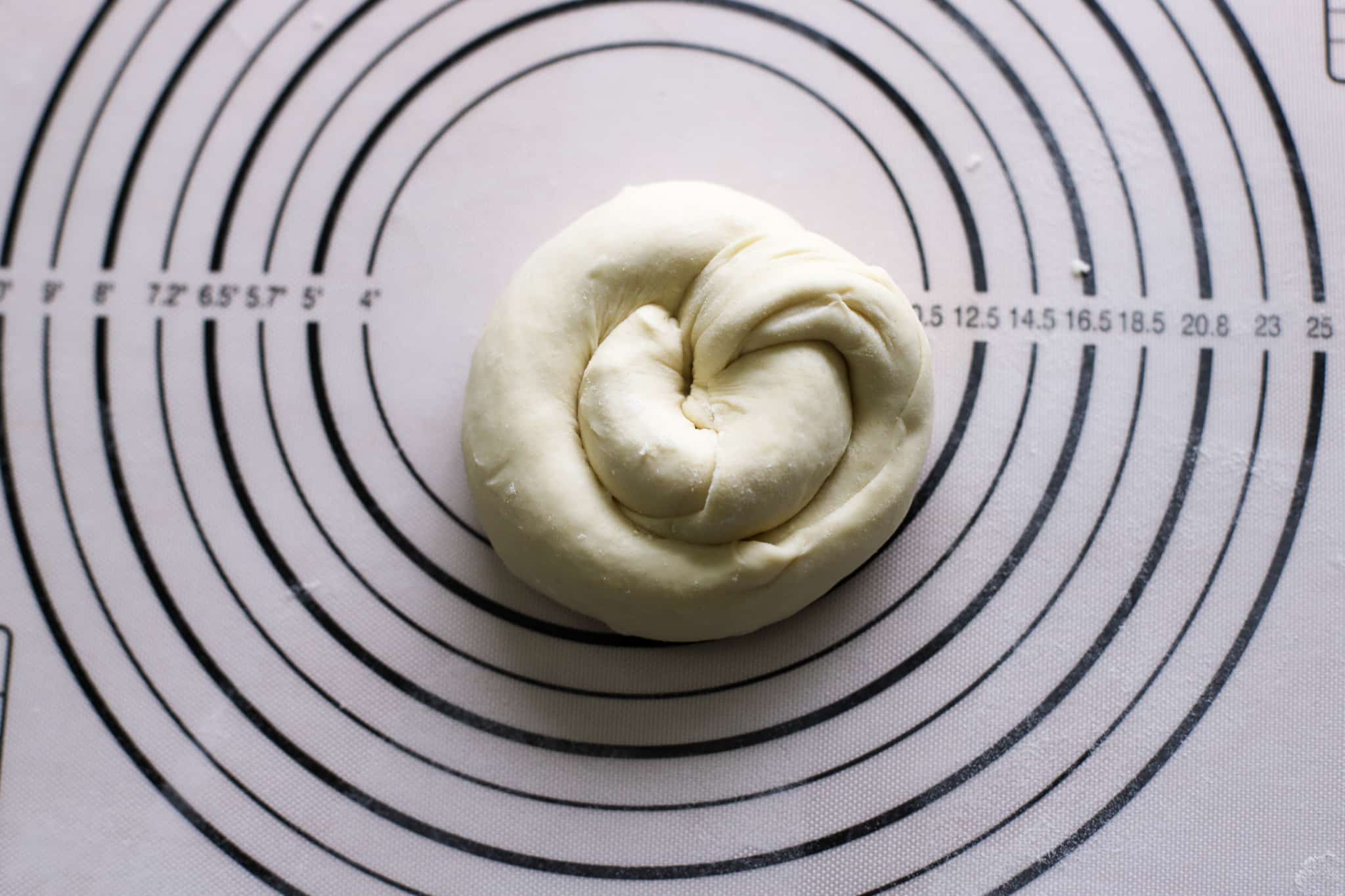
- Oil it - Mix the softened butter and oil together in a small bowl. Lightly oil the roti with about 1 teaspoon oil mixture or enough to cover the entire surface. Use a pastry brush or your hands to spread it evenly. Sprinkle some flour, then roll it up into a log and coil it into a spiral, like a cinnamon bun. Let it rest for 10 minutes. While the roti is resting, around the 5 min mark heat up your skillet or tawa on medium-low. Flatten and roll out dough again into a round about ¼ inch thickness or 6-7 inches wide.
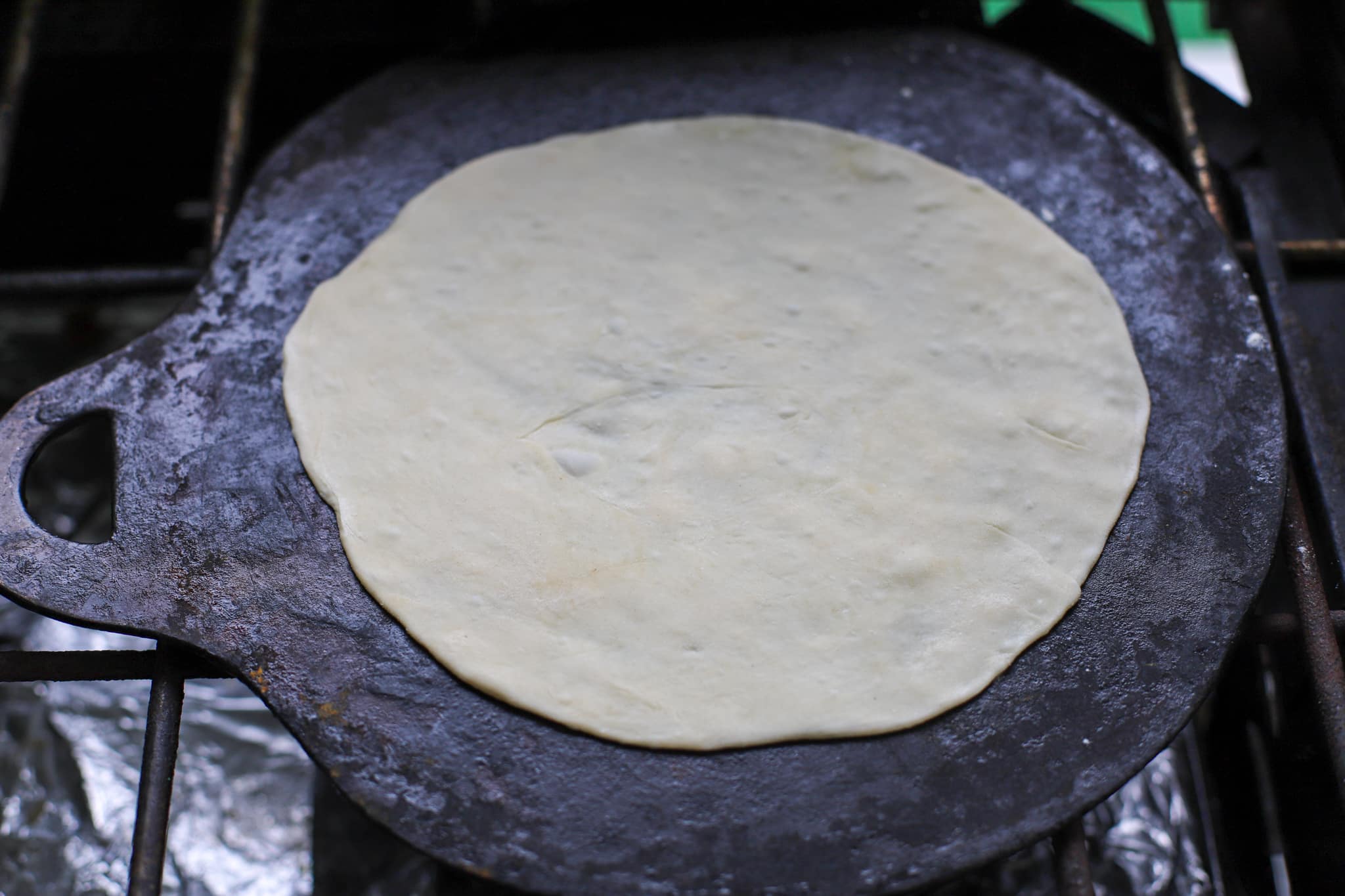
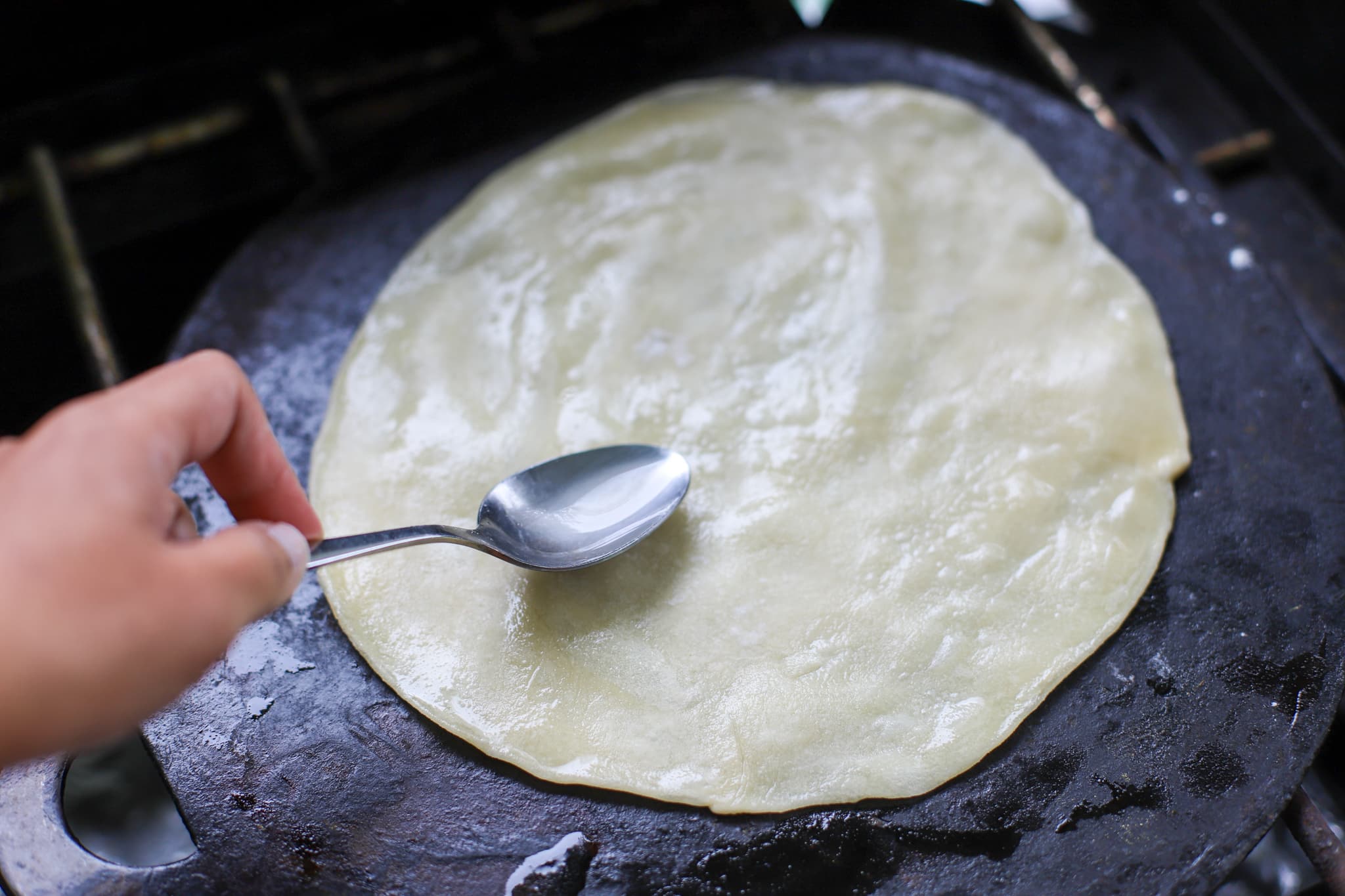
- Cook the roti - Place the roti onto the hot surface. When small bubbles form, flip it and lightly brush or dab with oil. Flip again, cooking both sides until lightly golden and cooked through.
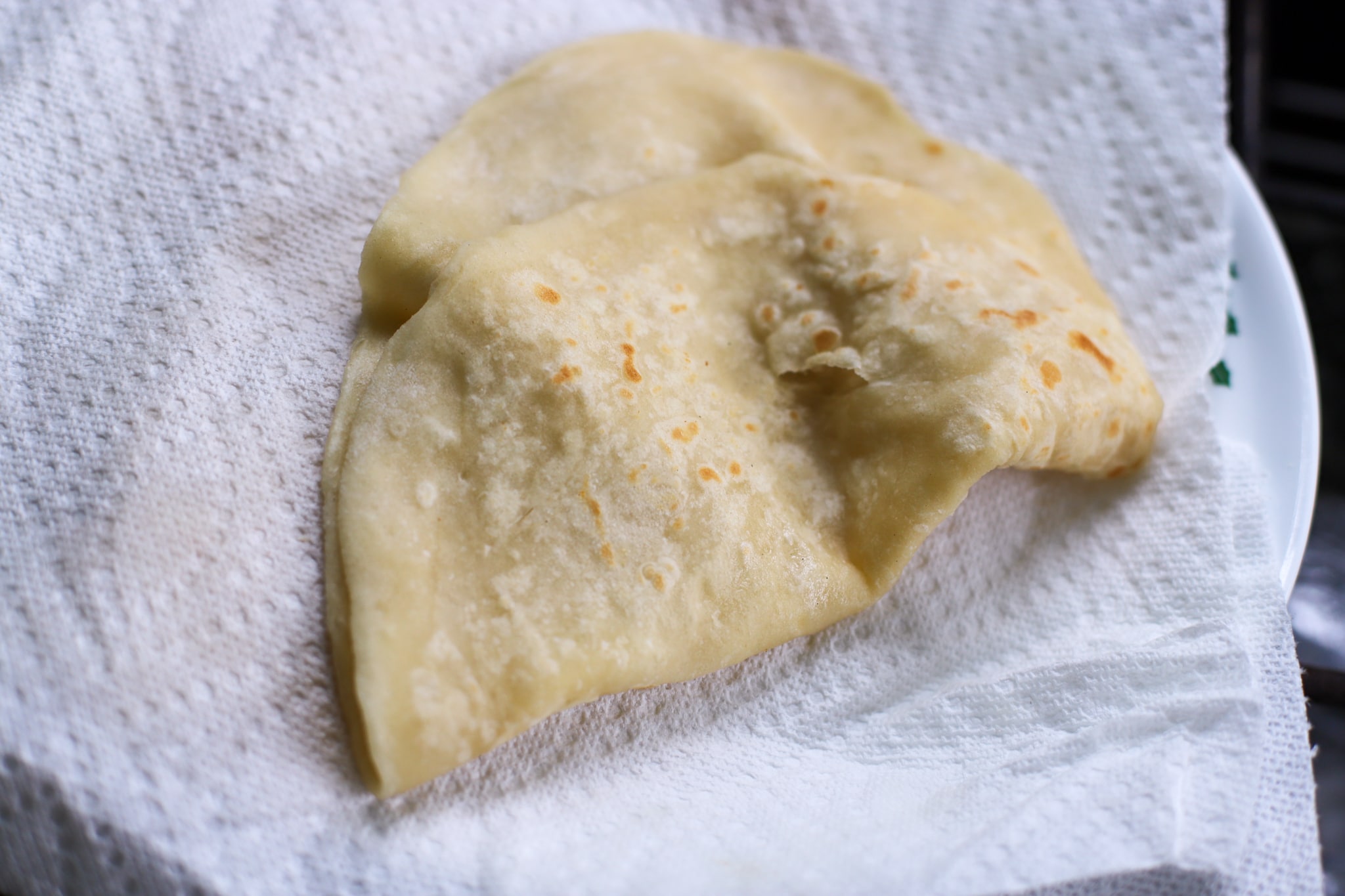
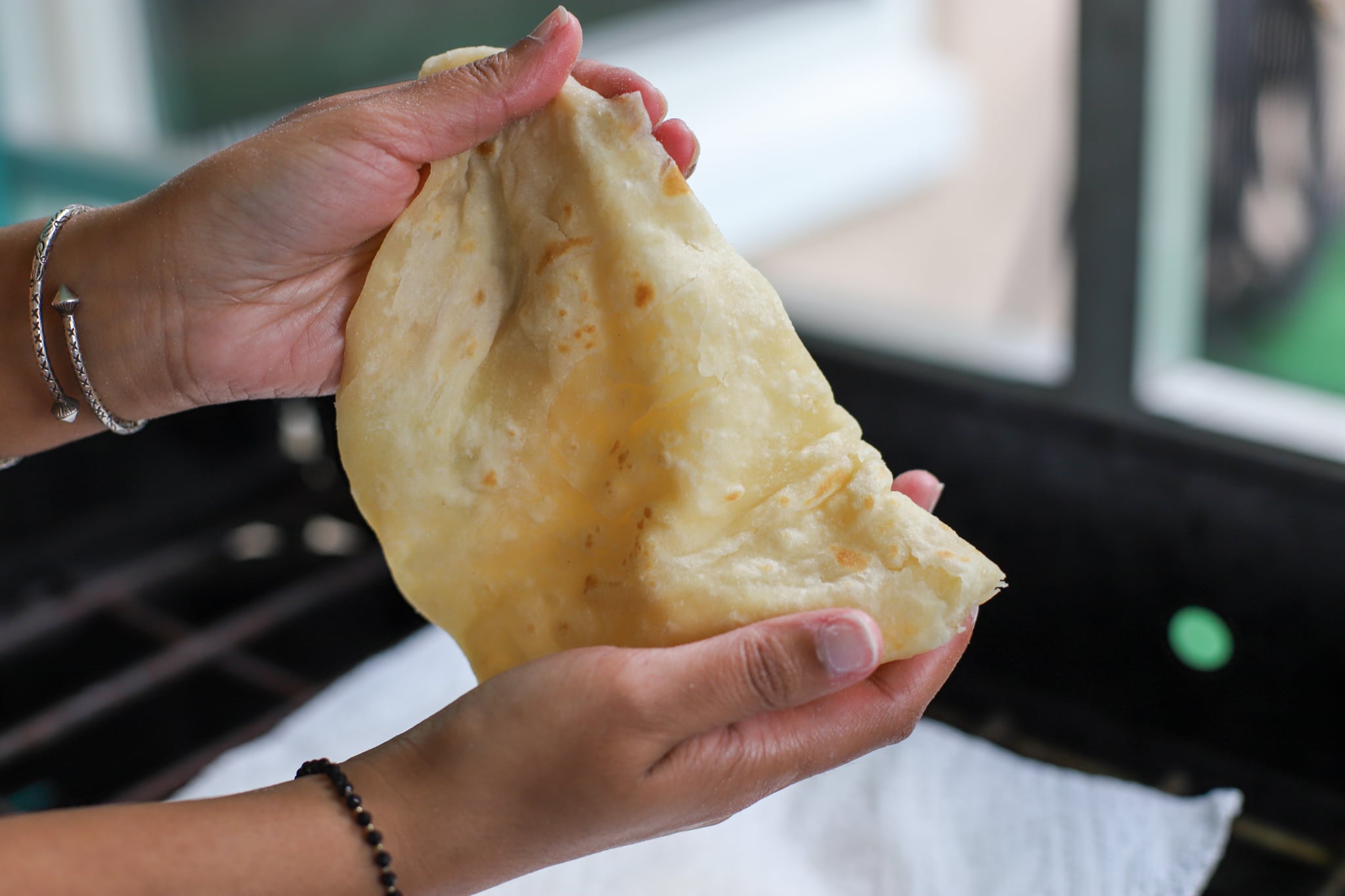
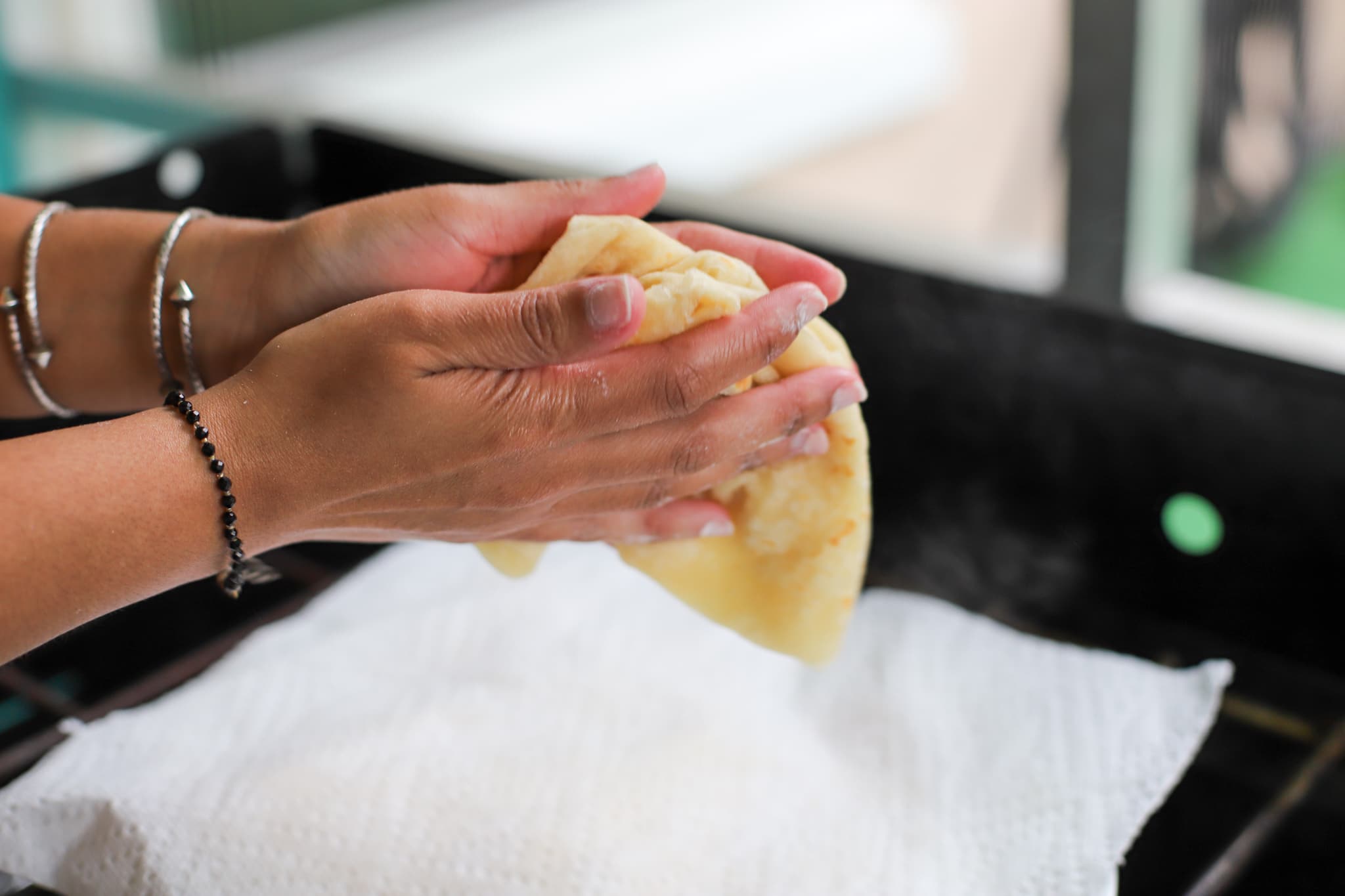
- Clap the roti - Once cooked, gently clap the roti between your hands, you can use a kitchen towel to protect your hands, or shake in a tupperware dish to release the flaky layers.
Notes
- I recommend using King Arthur brand unbleached flour
- Using a cast iron skillet or a tawa is best for cooking the roti evenly.
- Allow your skillet or tawa to heat up evenly and on medium low heat for a few minutes until it's hot enough. If it starts to smoke, it is too hot and will burn the roti. Turn the heat off, let it cool, and start again.
Leave a Reply