

Jump to:
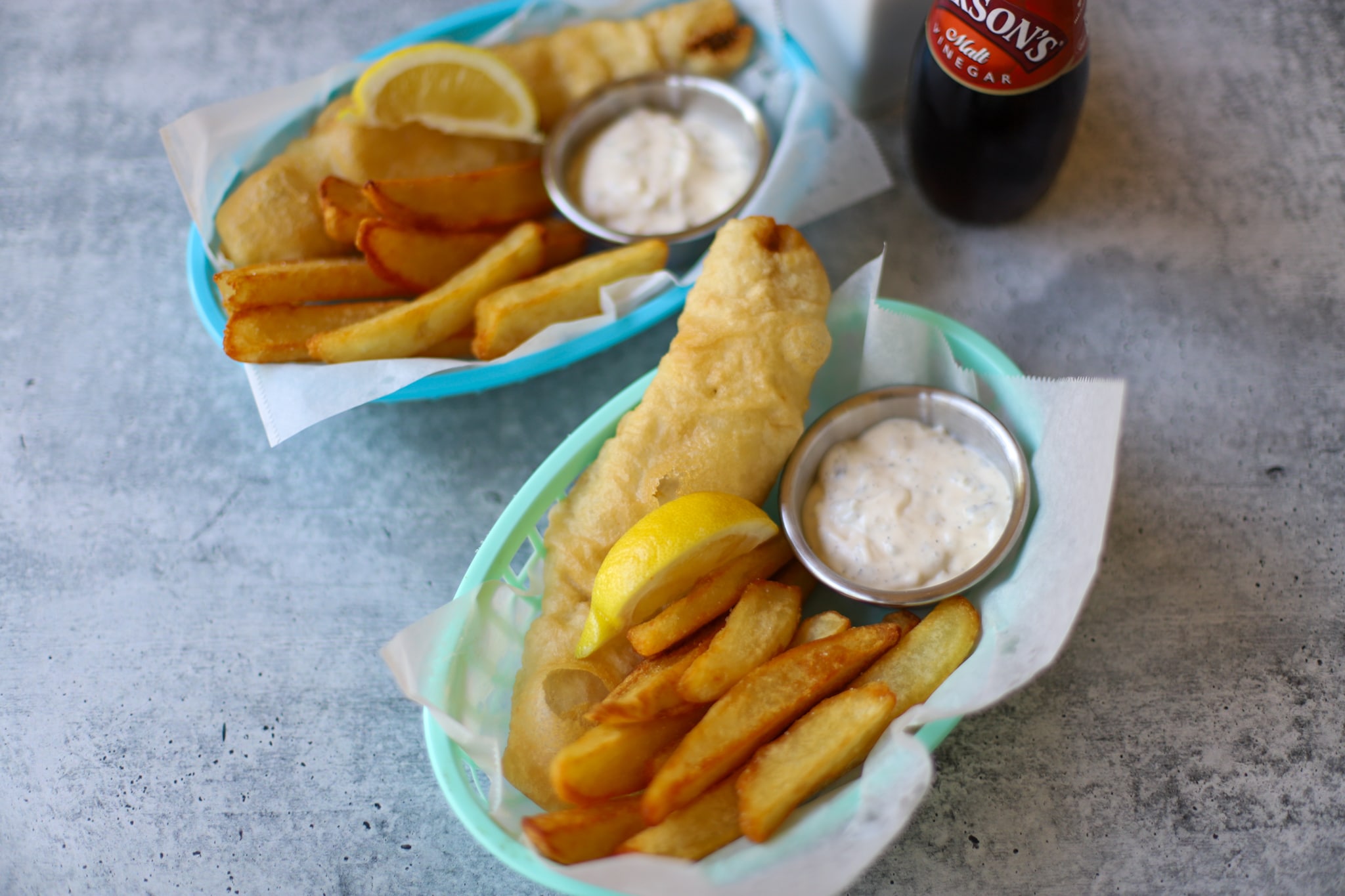
A British-Guyanese Childhood and a Love of Fish and Chips
Fish and chips may be one of Britain's most iconic meals, but for my cousin Anthony Tiwari, it's part of his family's story. Over the past few months, I've been filming my Small Batch West Indian Cooking series at Anthony's house, and during breaks between recipes we've spent a lot of time talking about his upbringing as a British-Guyanese. Listening to his stories has been fascinating because so much of it mirrors my own experience growing up Guyanese-American.
Anthony is a distant cousin on my father's side of the family, but if you're Caribbean, you already know we don't spend much time figuring out exactly how we're related (and sometimes we’re even more confused by it once we do). One family connection is enough to make you cousins. So when a reader recently asked for a fish and chips recipe, Anthony was more than happy to share his expertise as a lifelong fish and chips enthusiast and former fish and chip shop owner.

Anthony was born in Harrow, northwest London, and lived there until he was two years old before his family moved to Romford in Essex, on the east side of London in what is known as the London Borough of Havering. This was during the 1980s, and at the time, Anthony's family was one of the only Guyanese families in the area.
Growing up in a British-Guyanese household meant life was a blend of cultures. At home, Anthony enjoyed the Guyanese meals his mother prepared, but outside the home he was immersed in British food culture. I was able to relate seeing that we both grew up balancing two worlds, one that was grounded in our Guyanese heritage and another influenced by the country we called home. For me foods like egg and cheese on a roll and turkey heros made up my foundational years growing up in New York, and for Anthony, that was a good fish and chips.
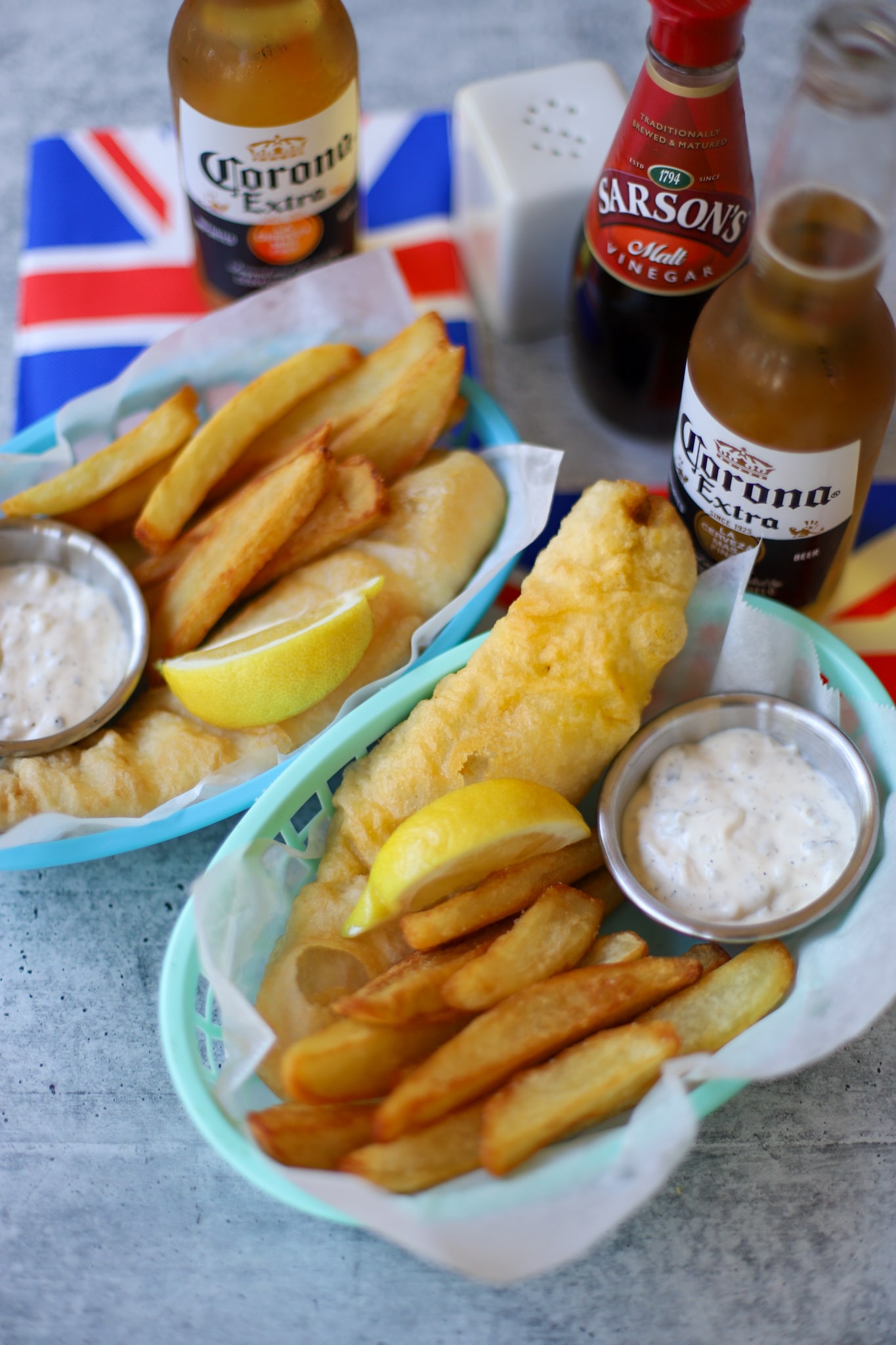
A Family Business Built Around Fish and Chips
In the 1990s, Anthony and his father opened a diner in Romford's town center on South Street called, Anthony's Diner. The restaurant became a popular spot for late-night eats, serving fish and chips, kebabs, and other takeaway favorites. They operated the diner for nearly ten years.
Anthony's father, uncle Ram also shared some of his own memories growing up in England. As a child, he would buy paper bags filled with crispy fried bits that broke off the fish during cooking called scraps. It was sold as “chips and scraps” at the time. Today, many shops no longer sell them separately and instead offer them as a free extra with an order.
After decades of eating fish and chips made with different varieties of fish and potatoes, Anthony's father still believes the best version he's ever had was made with rock eel and Maris Piper potatoes, a variety of potato prized for producing excellent chips.
So What Makes Great Fish and Chips?
At first glance, fish and chips seems like a straightforward meal, battered fish, fried potatoes, done. But after making it with Anthony, I quickly learned there is quite a bit of technique involved.
Everything matters from the type of flour used, temperature of the liquid when mixing the batter, the way the fish is lowered into the oil, to the double-fry method used for the chips. These small details make the difference between fish that's greasy and heavy versus fish that's crisp, light, and flaky. Anthony has adapted his recipe over the years to use ingredients that are easier to find in the United States while still producing results similar to what you'd find in a good British fish and chip shop.
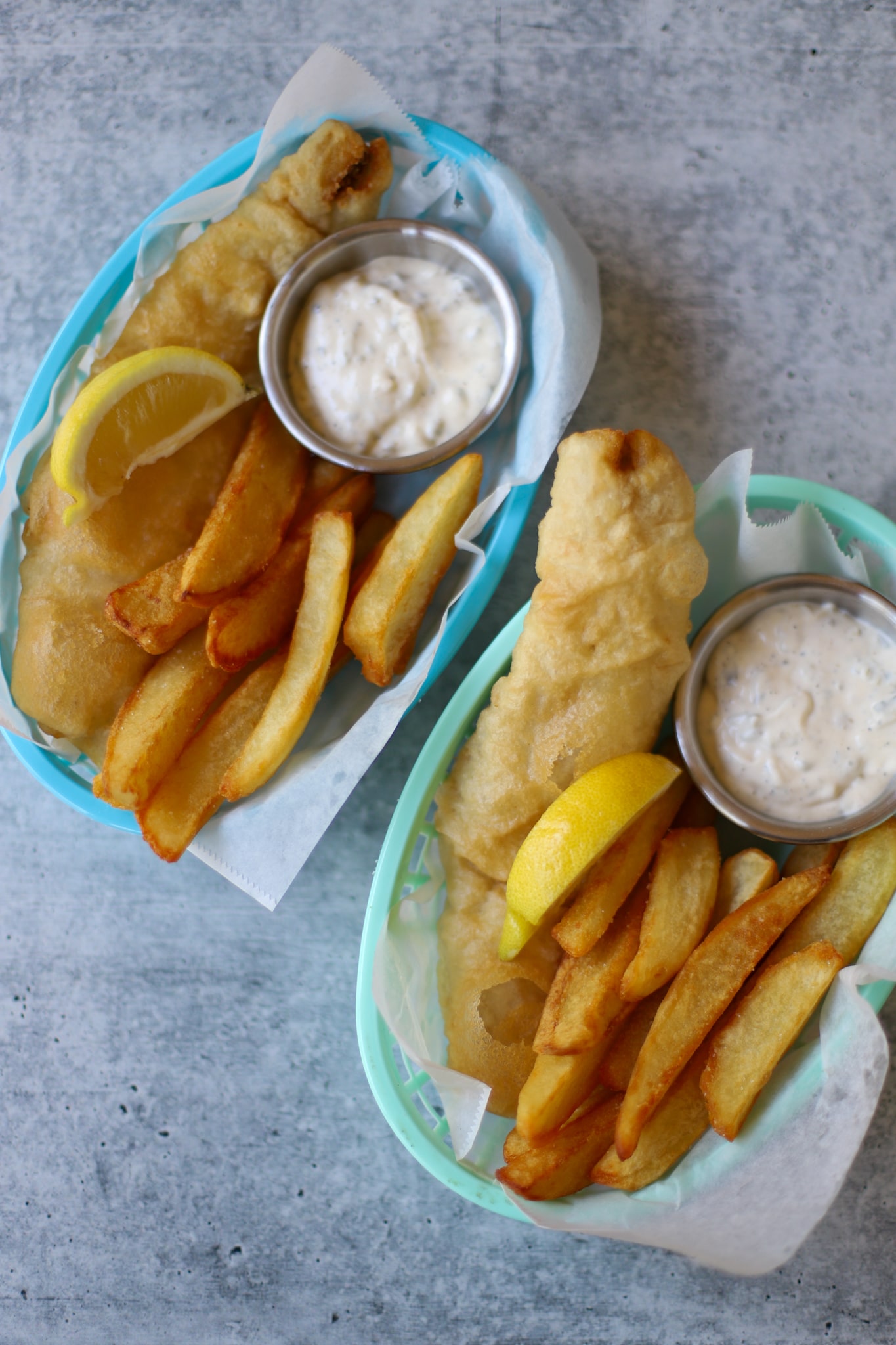
If you’ve never had this dish, you’ll notice the fish itself is plainly seasoned. It’s typically just dipped in a simple batter of flour and water or beer to let the delicate flavor of the white fish shine through. The neutral batter acts as a blank canvas so it can be paired with tangy malt vinegar, salt, and tartar sauce.
The Best Fish for Fish and Chips
Traditionally, fish and chips in England is made using:
- Cod (the most traditional and widely used)
- Haddock
- Plaice
- Pollock
- Rock salmon (often dogfish)
- Hake
In the United States, some excellent substitutes include:
- Cod
- Pollock
- Whiting
- Swai
- Haddock
Look for mild, flaky white fish fillets that are firm enough to hold together during frying.
My First Fish and Chips Experience in England
The first time I ever had fish and chips was during my first trip to England when I was 21 years old. It was a graduation trip with my cousin Jenny, who was already quite the world traveler. After landing, fish and chips was the very first meal we ate before even checking into our hotel. I'll admit, my very American self was confused. When I heard "chips," I genuinely thought the meal would be served with potato chips, like the kind that come alongside a deli sandwich in the United States! Instead, I was presented with a massive portion of thick-cut fried potatoes. That was my first lesson in British food terminology. Fast forward 22 years, and now I'm sharing a fish and chips recipe with the help of my British-Guyanese cousin, fully aware that in Britain, chips are fries and crisps are chips.

Fish & Chips Recipe
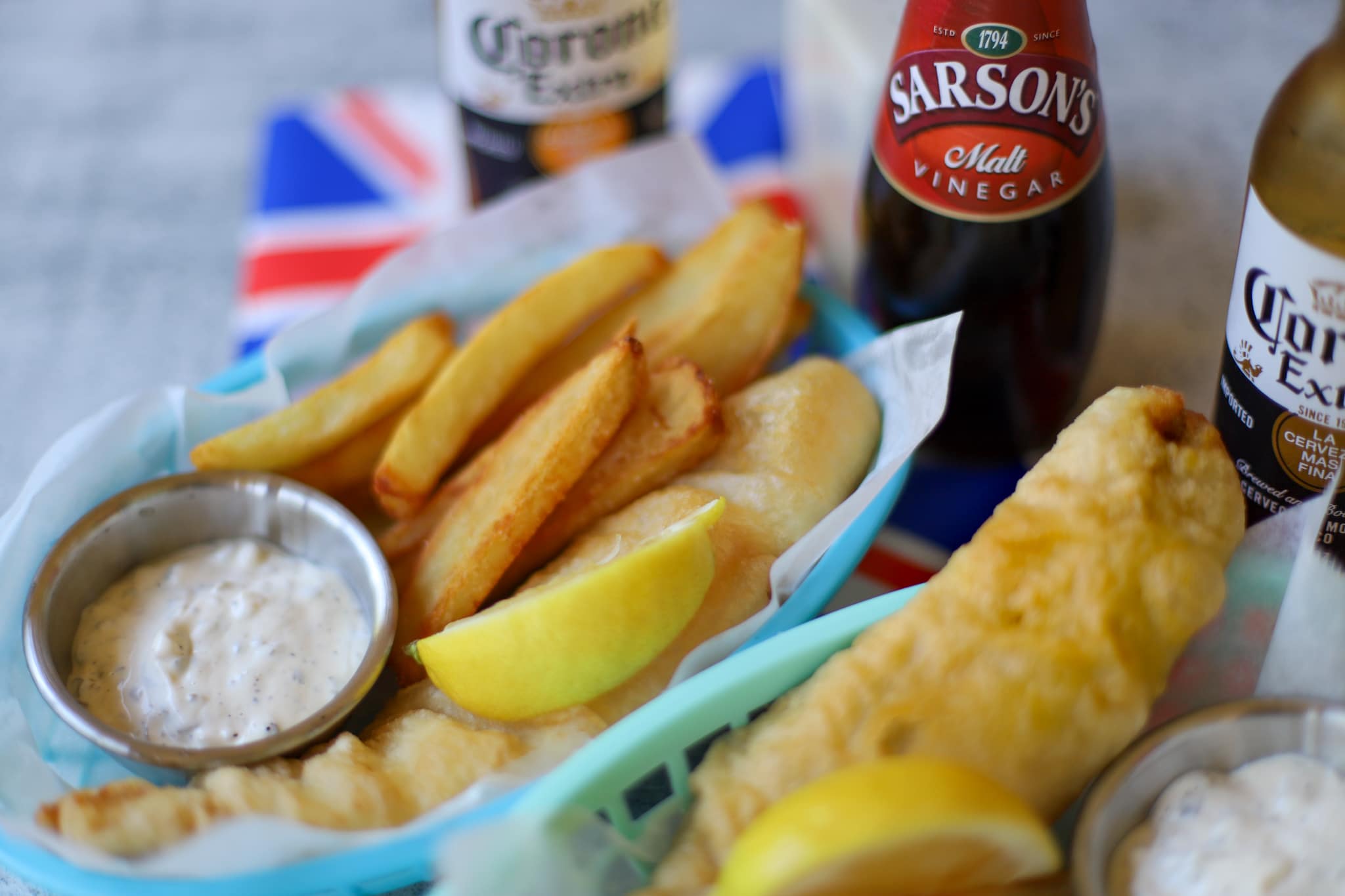
Crispy battered fish and golden double-fried chips come together in this authentic British fish and chips recipe, shared by my British-Guyanese cousin and former fish and chip shop owner, Anthony Tiwari.
Ingredients
For the Fish
- 2 lb (900g) white fish fillets such as cod, swai, pollock, or whiting
- 1 cup (160g) rice flour, for dredging
- ¾ cup (95g) unbleached all-purpose flour
- 2 teaspoons baking powder (8g)
- 1 teaspoon salt (6g)
- ½ teaspoon black pepper
- ½ teaspoon paprika
- 16 fl oz (475ml) cold sparkling water or cold lager
For the chips
- 6 large russet potatoes (about 3 lb / 1.4kg), peeled
- Water for soaking
- Salted water for boiling
- Neutral oil for frying (grapeseed, peanut, vegetable, canola, or sunflower oil)
For the tartar sauce
- 1 cup (240g) mayonnaise
- 3 tablespoons (30g) finely chopped capers
- 1 tablespoon (15ml) fresh lemon juice
- 1 teaspoon Dijon mustard
- 1 tablespoon (4g) finely chopped fresh parsley
- ¼ teaspoon black pepper
- Pinch of salt, to taste
Instructions
Make the tartar sauce
In a small bowl, combine the mayonnaise, chopped capers, lemon juice, Dijon mustard, parsley, black pepper, and salt. Whisk until well mixed. Cover and refrigerate for at least 45 minutes before serving to allow the flavors to meld together. Serve alongside hot fish and chips with extra lemon wedges and malt vinegar, if desired.
Prepare the chips
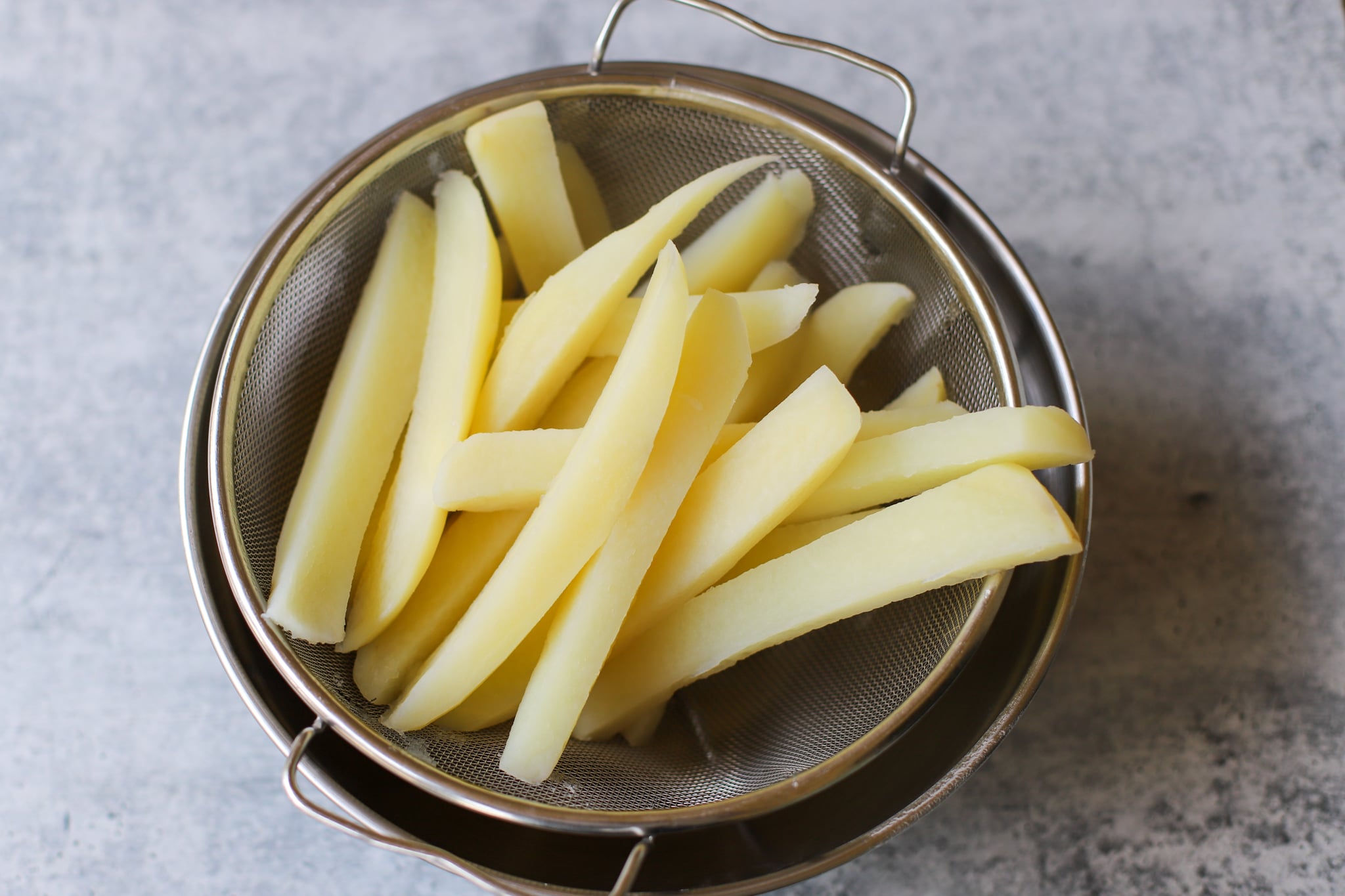
Cut the potatoes into thick chips, about ½-inch (1.25cm) wide. Place them in a large bowl, rinse well, then cover with fresh water. Let soak for 20 to 30 minutes to remove excess starch.
Bring a pot of salted water to a boil. Drain the potatoes and transfer them to the pot. Cook for 6 to 8 minutes, or until the potatoes are just beginning to soften but still hold their shape.
Drain immediately and return the potatoes to the warm pot. Cover with a lid or clean kitchen towel and gently shake the pot to rough up the edges slightly. Allow the potatoes to sit for 5 to 10 minutes so the remaining moisture can evaporate.
First Fry
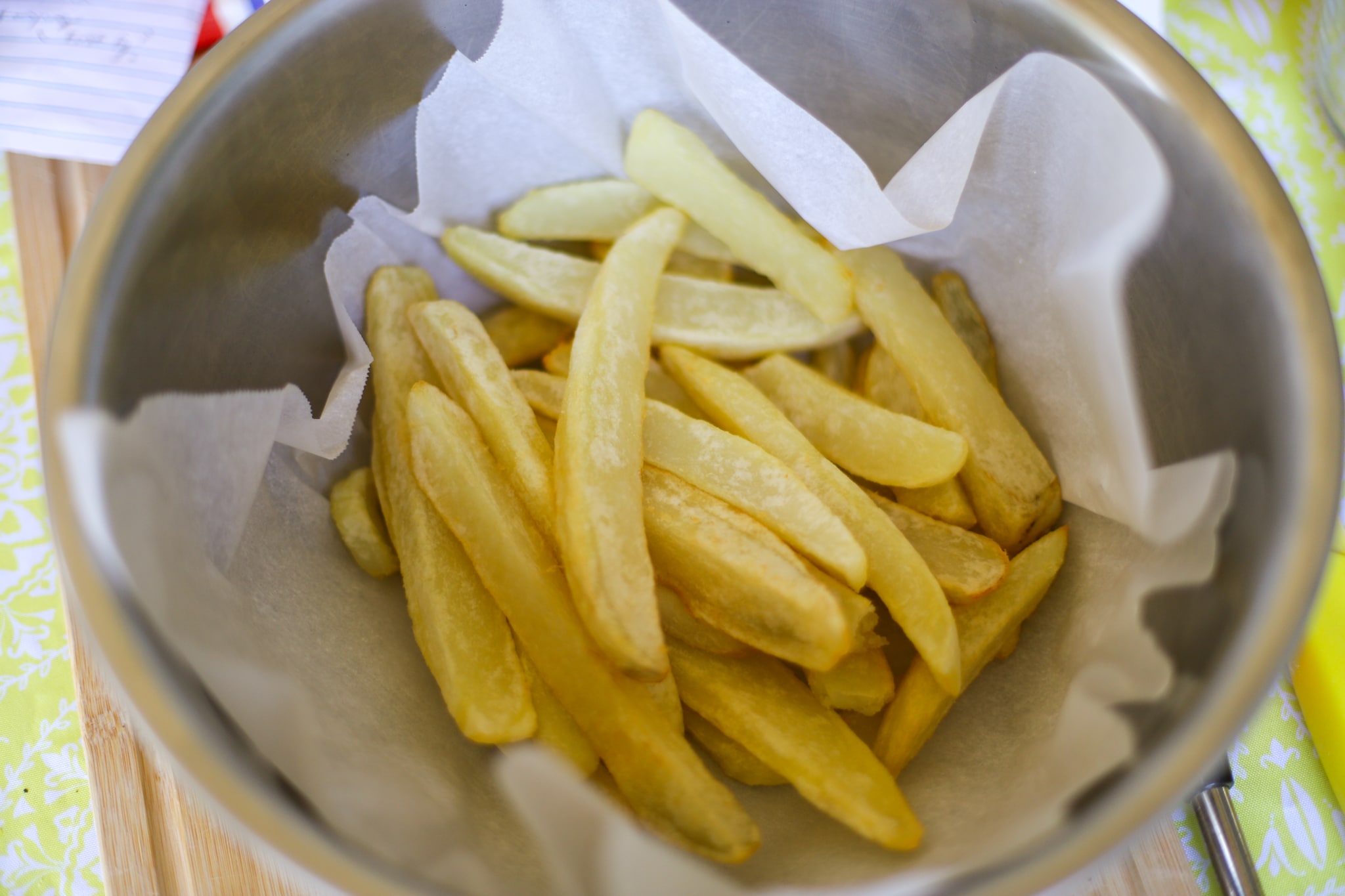
Heat oil in a deep pot or fryer to 325°F (163°C). Working in batches, fry the potatoes for 4 to 5 minutes. At this stage they should be cooked through but still pale in color. Transfer the chips to a wire rack or paper towel-lined tray and allow them to cool for 10 to 15 minutes while you prepare the fish.
Make the batter
Place the rice flour for dredging in a shallow dish. In a separate mixing bowl, whisk together the all-purpose flour, baking powder, salt, black pepper, and paprika. Slowly pour in the cold sparkling water or lager, whisking until a smooth batter forms. The batter should be thick enough to coat the fish but still flow easily from a spoon. Keeping the liquid very cold is one of the secrets to a light, crispy coating.
Prepare the fish
Pat the fish fillets completely dry with paper towels. Lightly coat each fillet in the rice flour, shaking off any excess. Dip the fish into the batter, ensuring each piece is evenly coated. Hold it from the tail and allow any excess batter to drip back into the bowl before frying.
Fry the fish
Increase the oil temperature to 350–375°F (177–190°C). Holding the fish by one end, slowly lower it into the hot oil. You can use your hands or a pair of tongs for this part. Anthony recommends holding the fish in place until about half of it begins to float before letting go. This helps the batter set properly and prevents the fish from sticking to the bottom of the pot. Fry the fish for 5 to 7 minutes, depending on thickness, until deeply golden and crisp. Transfer to a wire rack while the remaining fish cooks.
Second Fry for the chips
Return the chips to the hot oil and fry for another 2 to 4 minutes, or until deeply golden and crisp on the outside. Remove from the oil, season immediately with salt, and serve alongside the hot fish.
Serve
Serve with malt vinegar, tartar sauce, lemon wedges, or mushy peas for a traditional British fish and chips experience.
Notes
Tips for Crispy, Non-Greasy Fish
Use Rice Flour
One of Anthony's most important tips is coating the fish in rice flour before dipping it into the wet batter.
Rice flour creates a lighter crust and helps prevent excess oil absorption during frying.
Use Cold Sparkling Water or Lager
Cold sparkling water or cold lager beer creates bubbles in the batter, which helps produce a lighter, crispier coating. Basically, what I learned from him is the colder the liquid, the better.
Lower the Fish Slowly
Instead of dropping the fish directly into the oil, Anthony holds the fish by the tail and slowly lowers it into the hot oil. He keeps holding it until roughly half of the fish begins to float, or what he calls “sealing.” Once the batter has set, he releases it completely to finish frying. This helps prevent the fish from sticking to the bottom of the pot and encourages an even, crisp coating.
Leave a Reply