

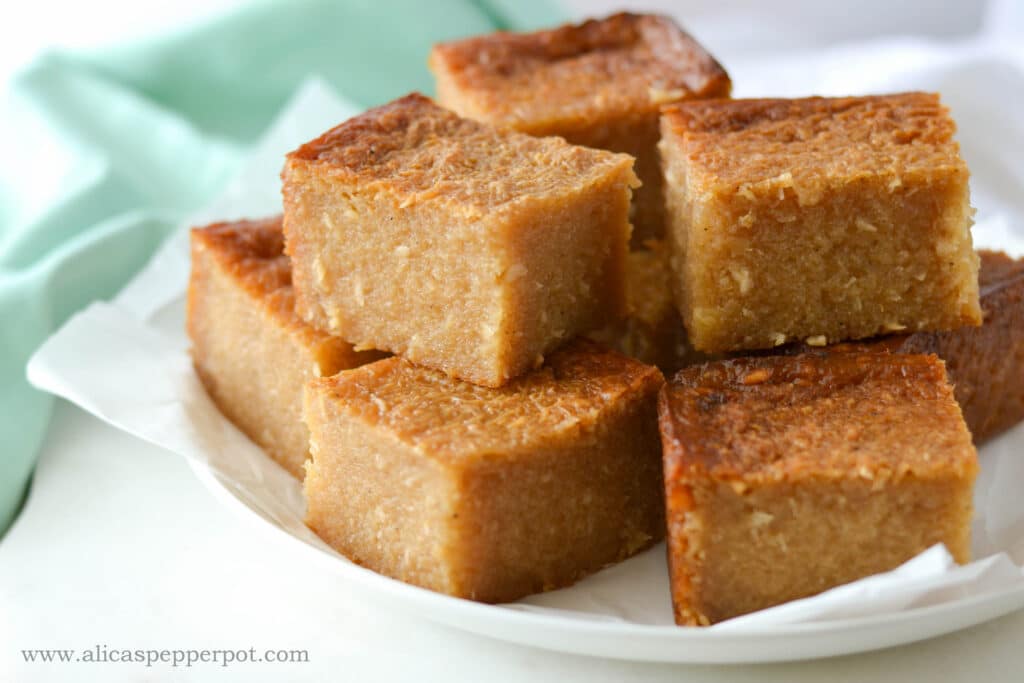
What is the Texture of Cassava Pone
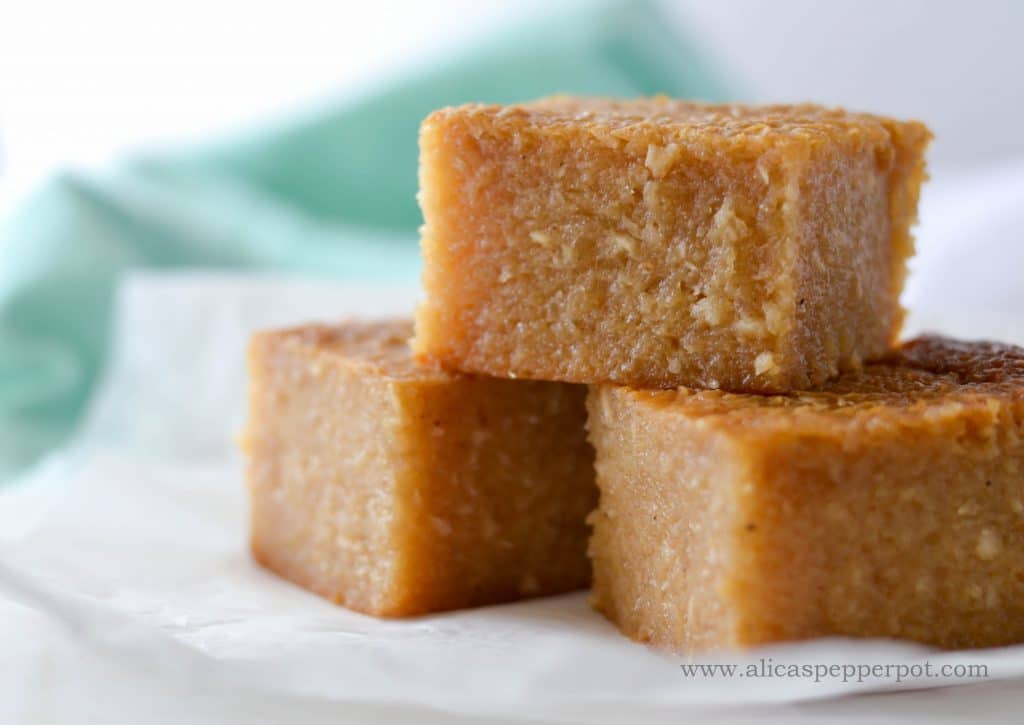
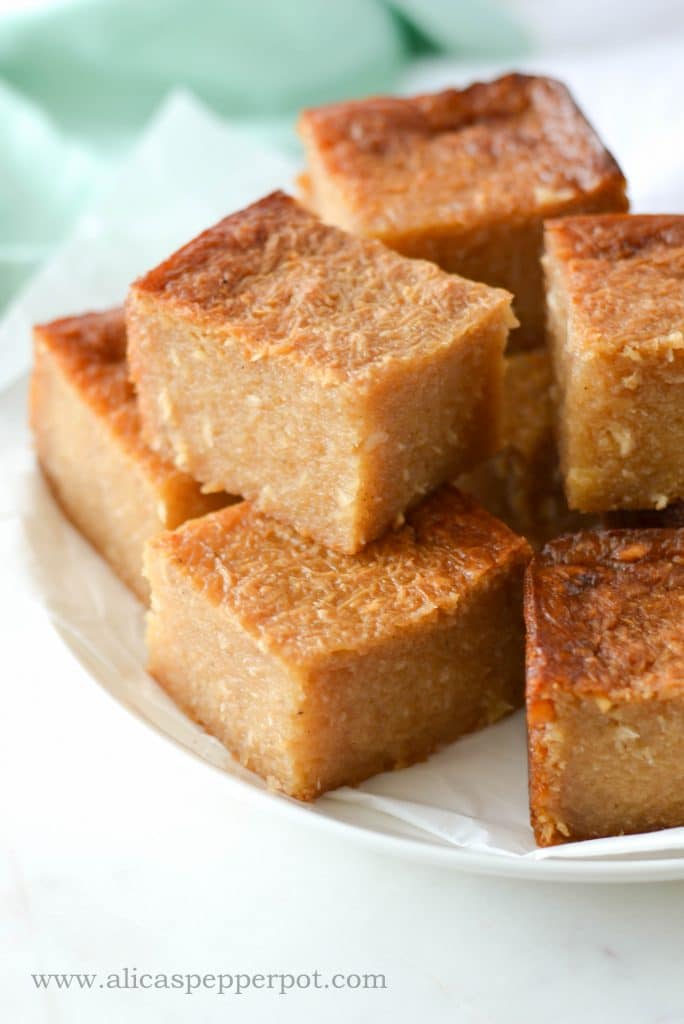
When I write recipe posts, I always ask myself: how can I describe this dish to someone who has never tried it before? Cassava pone has a truly unique texture. The starch released from the cassava during baking gives the pone its iconic, sticky texture. It’s gummy and slightly gelatinous. Think of it like the chewiness of boba pearls or tapioca. It’s one of those things you really have to taste to understand. I especially love the center of the pone, where it’s at its gooey, sticky best. I savor it slowly, pulling off small pieces to really enjoy it. I know I’m in the minority here, most people I’ve asked swear by the edges. And I get it! The edges caramelize beautifully in the oven, creating a chewier, sweeter bite.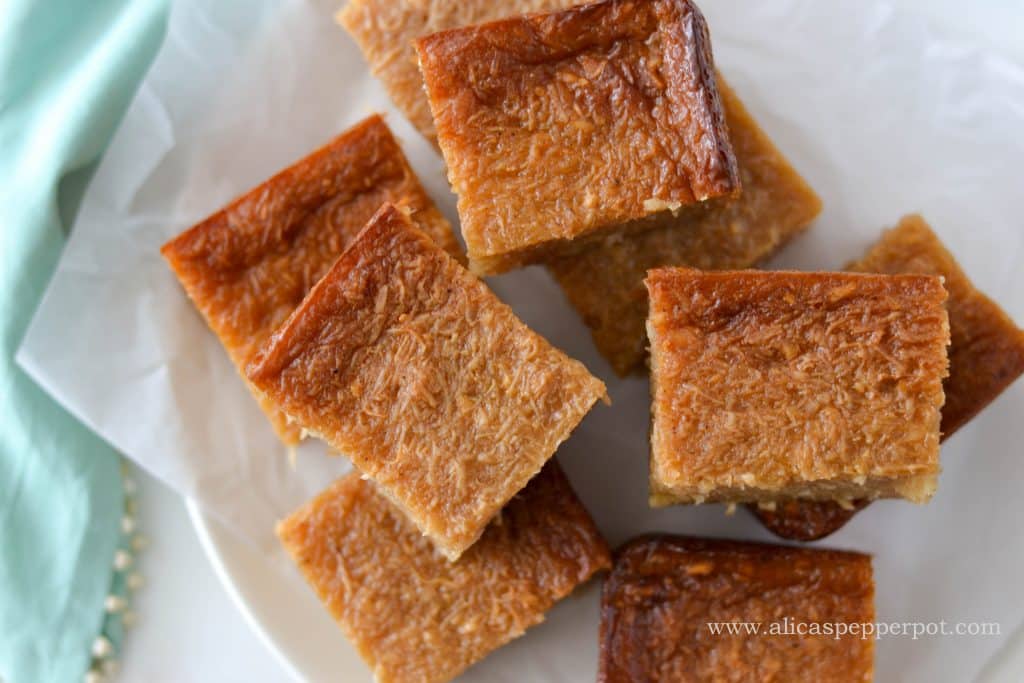
Method
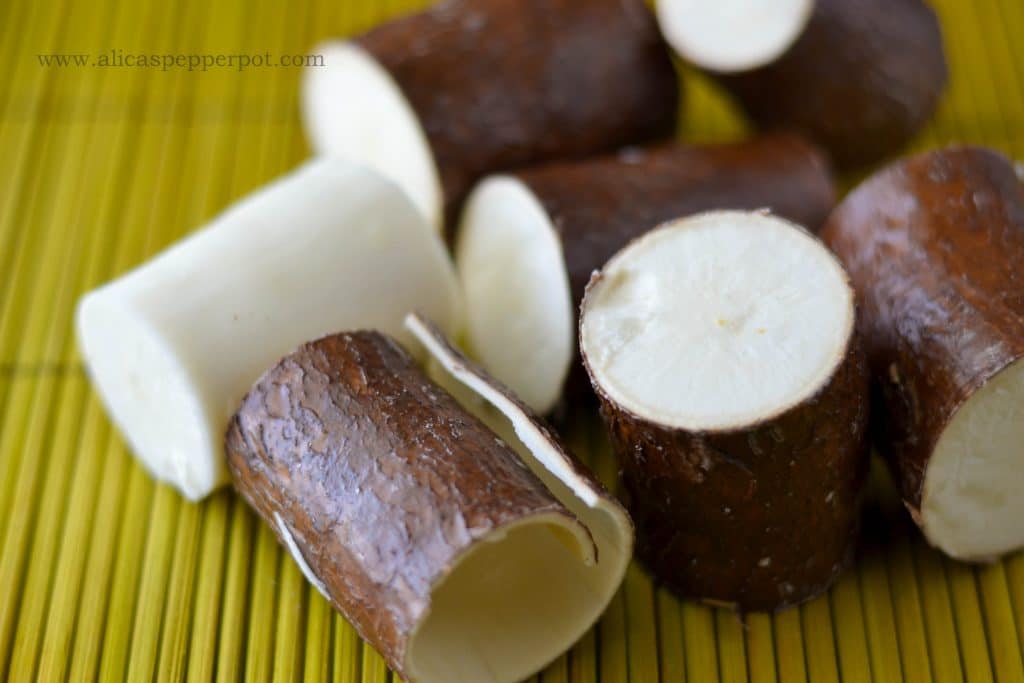
For this recipe, I used four long, medium-sized cassava roots. When I weighed them at the store, they totaled about 4 lbs. Once peeled, the ends chopped off, and any spoiled bits discarded, the weight naturally dropped to about 3lbs. Don’t worry if you end up with a little more or a little less than 3lbs; pone is wonderfully forgiving when it comes to measurements. The batter will still come together beautifully, so don’t stress about being exact.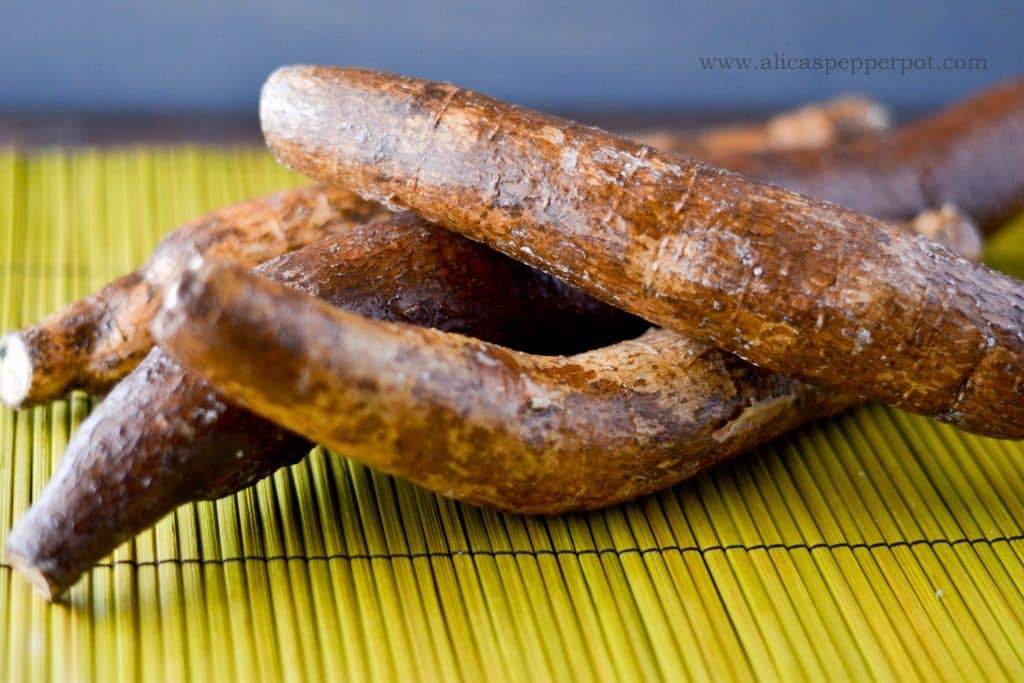 To peel the cassava chop into smaller pieces. Run a knife gently down the center to make a slit. Insert knife under the slit and lift away the skin.
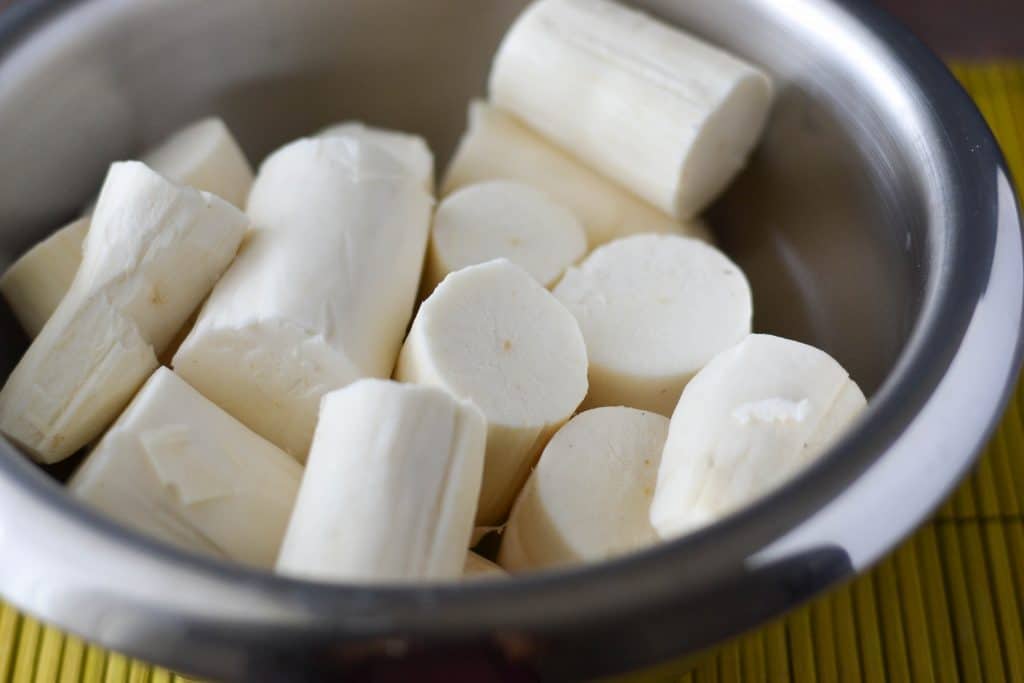 Grate cassava on the finer side of your grater.

Mom's Traditional Grater
Here’s a photo of the grater my mom uses to grate coconut. These days, there are plenty of modern options, but she swears by the traditional method. You sit on the wooden plank, hold the coconut in the crevice, and move it back and forth against the blade. The coconut meat is finely scraped, falling into a bowl below, resulting in beautifully light and fluffy shreds.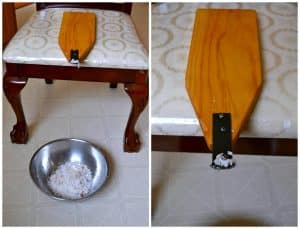
Modern Shortcuts (Because Life Is Busy)
While I have so much appreciation for the traditional methods, I also fully embrace the convenience of what’s available today. Frozen grated cassava and frozen grated coconut are excellent options and can save a significant amount of prep time. Just be sure to thaw them completely and drain off any excess liquid before mixing your batter so you don’t water it down. Another easy method is to skip grating altogether. Simply peel and chop the cassava into small pieces, then blend it in a high-powered blender or food processor until finely processed. This creates a texture very similar to grated cassava and works beautifully in pone. Long gone are the days when you had to stand over a box grater, unless, of course, you want to. These shortcuts make cassava pone much more accessible, especially for busy home cooks or anyone trying this recipe for the first time. Back to the recipe. Add sugars, spices, coconut, and butter. I used frozen grated coconut and just added a handful to the bowl. After mixing everything well, pour milk in last.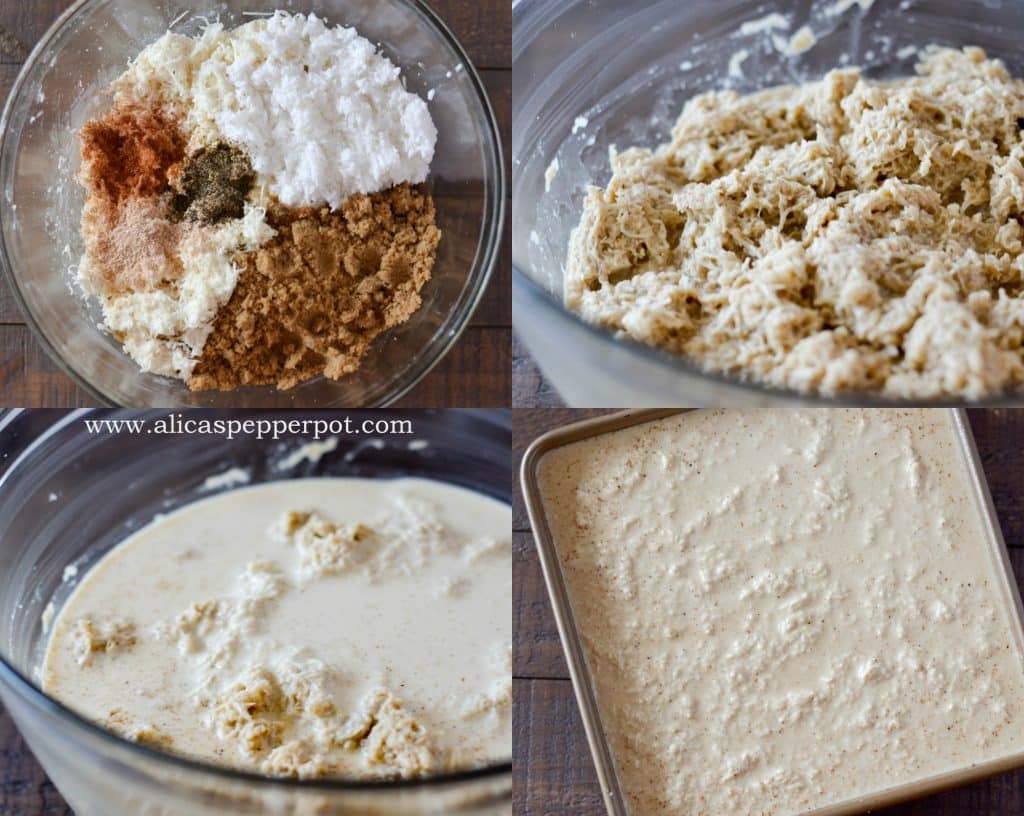 Bake until golden brown.
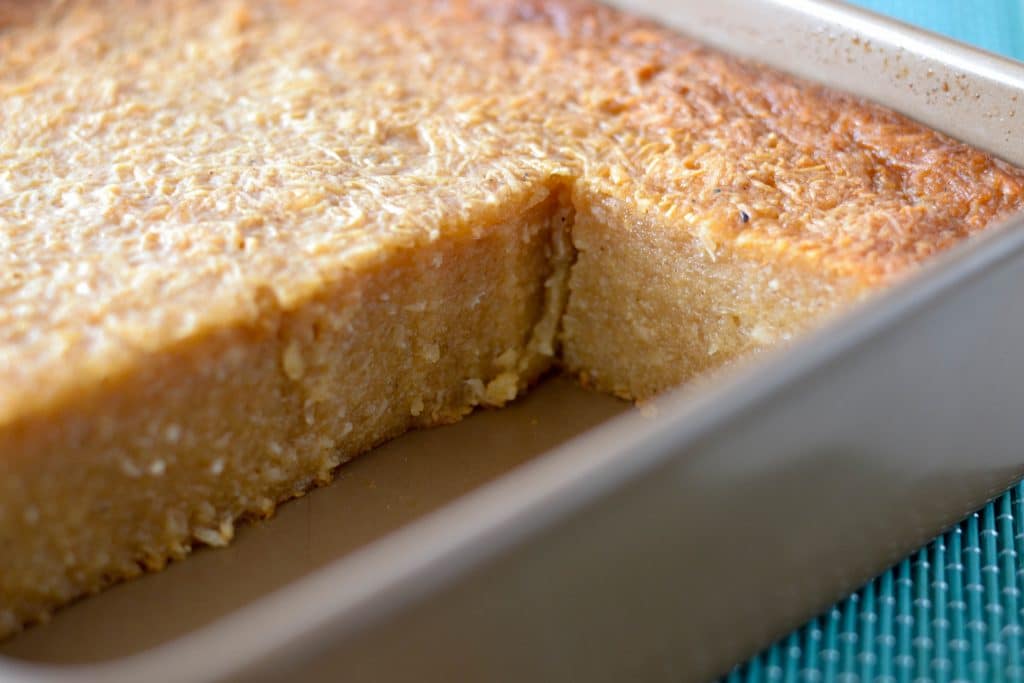
For the Edge Lovers
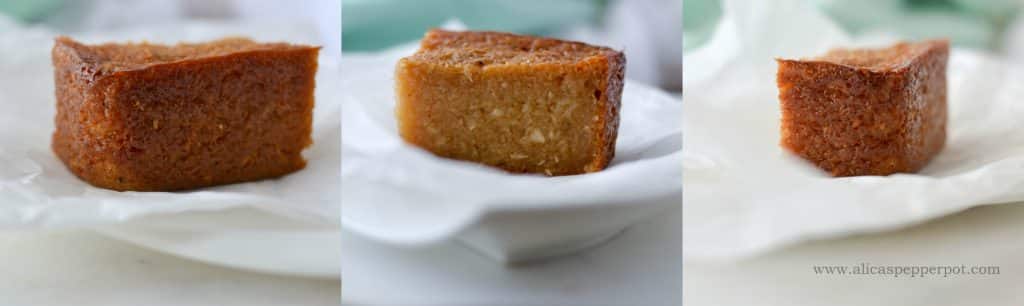
The Middle Pieces
 Serving Idea: Perfect for Gatherings
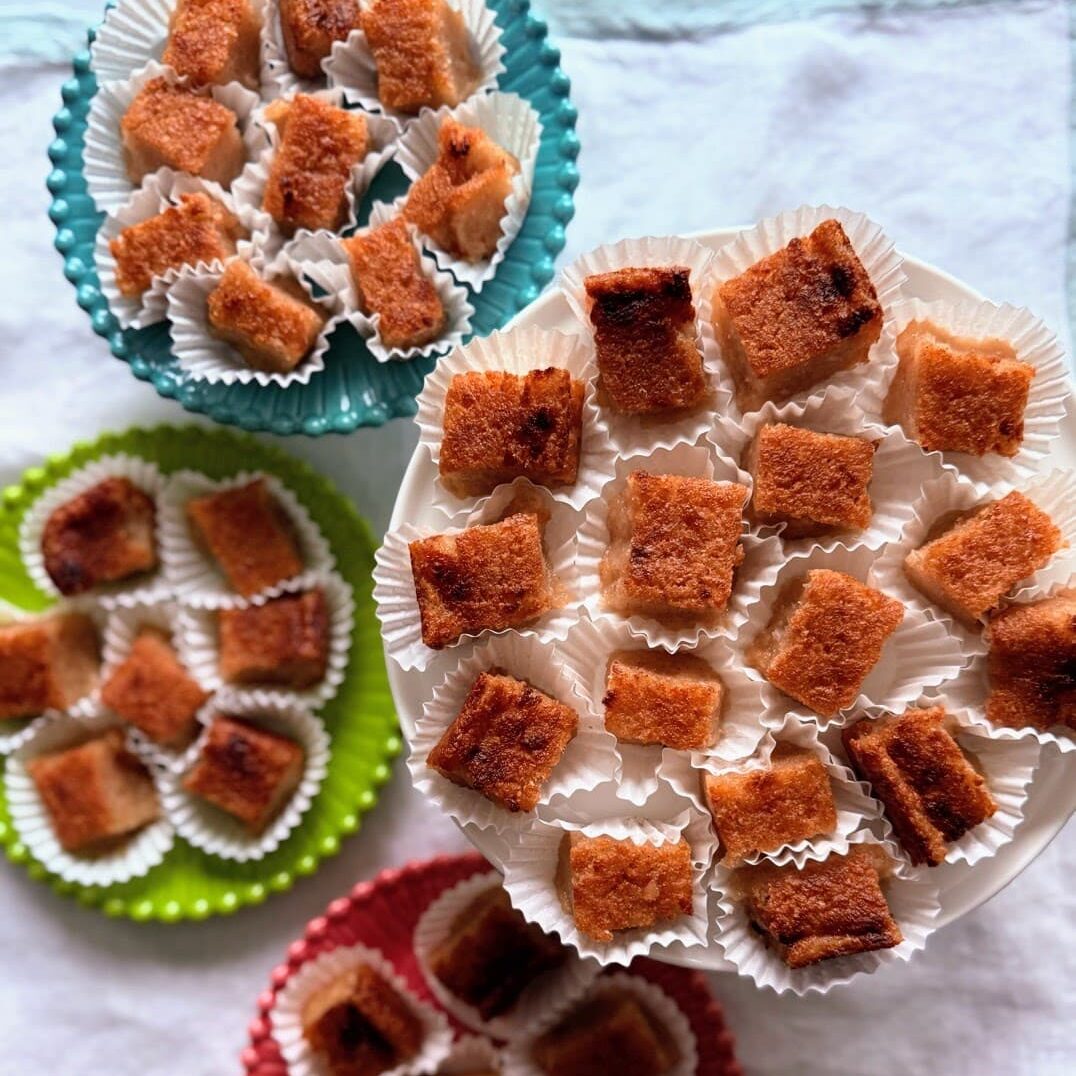
Cassava pone is quite rich, which makes it perfect for serving in smaller portions. An easy and beautiful way to present this for a potluck, Easter, or Mother’s Day brunch is to cut the pone into small squares and place each piece into mini cupcake liners. It instantly elevates the presentation and makes it easy for guests to grab and enjoy as part of a dessert table.
Serving Idea: Perfect for Gatherings
Cassava pone is quite rich, which makes it perfect for serving in smaller portions. An easy and beautiful way to present this for a potluck, Easter, or Mother’s Day brunch is to cut the pone into small squares and place each piece into mini cupcake liners. It instantly elevates the presentation and makes it easy for guests to grab and enjoy as part of a dessert table.
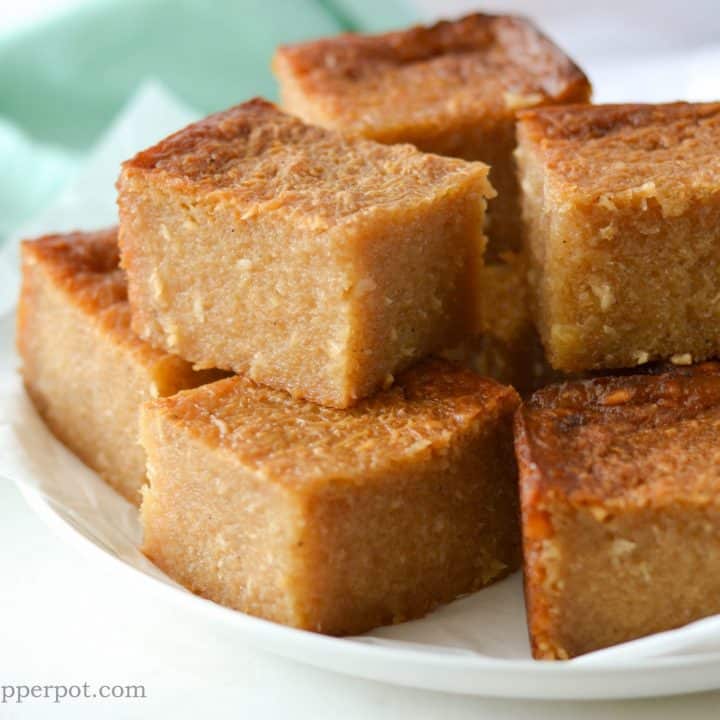
Cassava Pone
Delicious, gooey, and perfectly spiced Guyanese cassava pone. Enjoy it with your favorite refreshing drink!
Ingredients
- 3 lbs peeled and grated cassava (or 3 lbs frozen grated cassava, thawed) see note below
- 1 cup grated coconut (or 1 cup frozen grated coconut, thawed)
- 1 teaspoon ground cinnamon
- ½ teaspoon freshly grated nutmeg
- ½ teaspoon black pepper
- 2 teaspoons vanilla extract
- 2 teaspoons almond extract or Caribbean mixed essence
- 1 ½ cups brown sugar
- 6 tablespoons softened butter (use non-dairy butter for a vegan option)
- 3 cups evaporated milk (equivalent to two 12oz tins, or use coconut milk for a vegan option)
- 1 teaspoon butter to coat the baking pan
Instructions
1. Preheat your oven to 350°F. Grease a baking pan of your choice with butter, I recommend a 10in for thicker pone or 9x13in for thinner pone.
2. Combine Ingredients (Fresh): If using fresh ingredients, peel and grate the cassava and coconut. Set them aside in a large mixing bowl.
3. Combine Ingredients (Frozen Substitution): If using frozen grated coconut or frozen grated cassava, thaw them completely before starting. Place the thawed cassava (3 lbs) and coconut (1 cup) into a large, deep mixing bowl.
4. Add the brown sugar, softened butter, ground cinnamon, freshly grated nutmeg, black pepper, vanilla extract, and almond extract to the bowl with the cassava and coconut.
5. Mix all the contents well using a whisk or wooden spoon until evenly combined.
6. Pour in the evaporated milk (or coconut milk for the vegan option) and mix gently to fully combine the liquid into the cassava mixture.
7. Pour the mixture into your prepared baking pan. Bake for approximately 60 minutes to a little over an hour. If you’d like to top more brown, turn on the broiler at 525 degrees for 3-5 minutes, checking it often. The pone is done when a tester inserted comes out mostly clean and the top is golden brown. A little stickiness on the toothpick is normal for casasva pone.
Notes
- Approximately 4 lbs of fresh cassava/yuca will yield about 3 lbs once peeled.
- Ensure both frozen grated cassava (3 lbs) and frozen grated coconut (1 cup) are completely thawed before mixing them into the recipe.
- If you do not have fresh or frozen grated coconut, you can substitute with sweetened coconut flakes found in the baking aisle.
- For a finer texture, I like to pulse the grated coconut (thawed frozen, or sweetened flakes) in a coffee grinder before adding it to the batter.
- I recommend using an aluminum or glass baking pan, non-stick pans will have a hard time browning the bottom of the pone.
Jr says
The best phone ever
Emily says
How do you grate the yuca without getting into the fibers in the core? Or do those also get into the mix? Thanks!
Alica says
Hi Emily, when you chop the cassava pull out the stem/cores before grating. You don't want that in the pone. Hope that helps.
Theresa says
Do I refrigerate leftovers or just leave on the counter?
Alica says
Hi Theresa, I like to refrigerate it once it is room temperature (on the same day I bake it), otherwise you will notice it starting to go bad after a few days on the counter.
Mardene Carr says
I love cassava everything but I have never had cassava pone. I am going to save this recipe
Jodi-Ann says
Will definitely try this. My best friend is half Guyanese, I may surprise her with it.
Valima Khan says
I have used a very similar recipe, approximately half your measurements, minus the almond extract but increasing the nutmeg.
I like to grate my cassava on the fine, bumpy side of the grater; the side commonly used for grating nutmeg. It makes the cassava very fine in texture. Also, I preferred use dessicated coconut. Fresh coconut makes the pone too wet.
I don't make pone often, but it's a very nice treat when I do. ?
Alica says
Thanks for those tips Valima. I used dessicated coconut for this recipe and realized I didn't note it. Glad you commented :).
Emma says
Amazing recipe! Thank you for the detailed instructions with pictures. I followed the recipe and everybody in the house loved it!
Alica says
Hi Emma, that's wonderful so glad everyone enjoyed it! Thanks for your comment!
Nigel says
A wet pone is the best pone !
Nerissa says
Thank you for your recipes, I love them. For me, it's very sentimental. I grew up enjoying these foods in Guyana but left quite young but not without a very good taste in my memory. You've helped me recreate these amazing tastes in my own kitchen for my children now living in Quebec. Shared your blog with my friends.
MARIE says
Thank you for this wonderful recipe. I made it on the week end and it was great.
Nafeeza says
My go to pone recipe.
Love your pics.....they look as good as they taste!
Never dissapointed. Thanks Alicia.
Marcella Chand says
I blended my cassava and coconut also instead of sugar I used 1/2 can of condensed milk, also added some raisins. so goos.
Shanny says
Thanks for sharing. I tried it it came out perfect. Thanks again you have a wonderful website.
Shanny
Preiya says
Please clarify - degree fh or cel.
Also when you preheat, what temp do you bake off? Newbie here... thanks!
Alica says
Hi there, it's 350 degrees Fahrenheit. I also bake at that temperature. Hope this helps.
Tammy says
Hi. Did you use sweetened or unsweetened dedicated coconut? Thank you.
Tammy says
Desiccated*
Alica says
Hi, it's naturally sweetened, but not sweet enough for the pone so I added more sugar to the mixture. Hope that helps.
JC says
I used this recipe and I was proud of the finished product. It tasted like my mother's pone and this was my first attempt at making cassava pone. I highly recommend this recipe.
MARIE says
Hi Alica,
Thank you for all the wonderful recipes you put out for us. The first time I made this recipe, I didn't have enough cassava. I adjusted the recipe accordingly and baked it in a 10x8 (about ) pan, the result was great. The second time I made it, I had the right amount of cassava and followed the recipe as stated. I baked it in the same pan, but it didn't cook. I had to end up throwing the whole thing out. Do you think the pan size for the full recipe should be 9x11 or bigger?
Tks. Marie
Philona Da Costa says
Hi Alica,
My co-workers want me to make pone for them. I was wondering if I can use the food processor for the cassava instead of using the grater?
Thanks for documenting these delicious recipes. Your recipes are truly decadent
Philona
Alica says
Hi, thank you! Yes, you can use the food processor I think it would be quiet efficient! Hope they enjoy the pone.
Devika s says
Hi Alicia,
I tried your cassava pone recipe, made it on Canada Day for my family party.
Delicious! The pan was empty before the party was over! lol
Alica says
That's great to hear! So glad everyone enjoyed it.
queen bee 55 says
Hi,
It's nice to think of the old fashioned Guyanese way of doing things,(and I am Guyanese), however, with the convenience of frozen grated cassava, (1lb), and a food processor for grating the coconut, you'll cut down on the prep time. I've done this many times and had good results. Also, instead of using evaporated milk, why not stay with the coconut flavour and use coconut milk instead? Alternatively, someone else suggested condensed milk, which would reduce the need for some of the sugar AND milk.
As a side note, to make the coconut finer, try using the coconut milk combined with the coconut pieces in the food processor as it'll be less noisy and maker for a different texture.
Alica says
Hi, Great tips! I've also used the food processor and substituted coconut milk, but have never tried frozen cassava. Thanks for your comment, it will be helpful for others!
Karen Larimore says
I was Googling images of cassava to find out what it looks like, and that’s how I found your page! (I’ve only used cassava flour.) The photo of your pone came up with the images and looked so good I had to click on it to check it out. I follow the autoimmune protocol, so I would need to make some substitutions in this recipe. Do you think coconut oil or palm shortening would work in place of the butter?
Alica says
Hi Karen, so glad you found me! Yes absolutely those oils would work in place of butter. You can even use avocado or grapeseed oil. And switch out the milk for any nut milk. The recipe is very forgiving and works well with substitutions. Hope you enjoy!
Stephanie says
Hi Alicia! I was wondering how your cassava pone gets that brown color. I don’t use brown sugar but instead just condense milk. Mine always come out lighter in color. Any thoughts on why?
Alica says
Hi Stephanie, it's definitely the brown sugar. Brown sugar, especially dark brown sugar has more molasses in it so when it cooks you tend to see the darker color appear. The edges also get chewy and crusty because of the higher molasses content of the brown sugar- it caramelizes with heat. Hope this helps!
Sabrina Kumar says
I made your plait bread and pepper pot for Christmas and it came out awesome..love your recipes.. I put milk instead of powdered milk and my bread came out nice n soft..thank you Alica for making your home part of my home Happy New Year to you and your family
Alica says
Hi Sabrina,
That's wonderful! So glad you enjoyed both recipes. Happy new year to you as well!
Justina Morgan says
Is dry cassavas will be able to make pone? I buy the try cassava at an African food stor
Alica says
Hi, I'm not sure, I've never tried it with dry cassava. Let us know how it turned out if you use dry cassava.
Nandini says
Hi Alicia
Do I have to squeeze out the juice from the cassava? I heard it's poisonous.
Alica says
Hi Nandini, you do not have to squeeze the juice out of the cassava. There are two types of cassava, bitter and sweet. The sweet variety is the kind we find in supermarkets, either fresh or frozen, and used for home cooking. It is also the type used in this recipe, along with other Caribbean dishes like boil and fry, cassava chips, or soup. Both bitter and sweet have levels of cyanide, but the sweet version has deficient levels, primarily found in the skin/peel. Once we remove the skin and cook the cassava by boiling, baking, steaming, frying, etc., it becomes perfectly safe to eat. I hope this was helpful to you! Alica
Dilip Ramdeen says
Hey Guys,
Days for grating cassava is over, if you have a Ninga Blender use it, blend the cassava & coconut in it then add the other stuff take to your desire.
Alica says
Hi Dilip, thanks for your suggestion! Yes, the Ninja works very well along with other high-powdered blenders like the
Vitamix. I've also used frozen grated cassava from local Latin markets. Best, Alica
Leslynne Miller says
Hi Alica,
I always wanted to try making cassava pone and finally I did with your recipe. I made it with frozen grated cassava because it is very difficult to buy good cassava, I was so happy with the outcome that I will be making it for a a pre New-year eve get together. Thank you so much. Whenever my daughter want to try something of Caribbean you are our go person.
Thanks again for sharing your recipes
Nadine says
Hi Alicia,
Can I use frozen grated cassava? And frozen grated coconut ? Would I drain it once it's thawed out?
Thank you!!
Alica says
Hi Nadine, yes you can absolutely use frozen grated cassava and grated coconut! I use that all the time! Don't drain it once it's thawed, though. The milk from the coconut and juices from the cassava add to the gooey-ness of the pone! I will update the post soon with new methods for grating as well as using store bought pre-grated cassava and coconut. Enjoy!